Squat Depth: How Deep Should You Squat and How to Get There
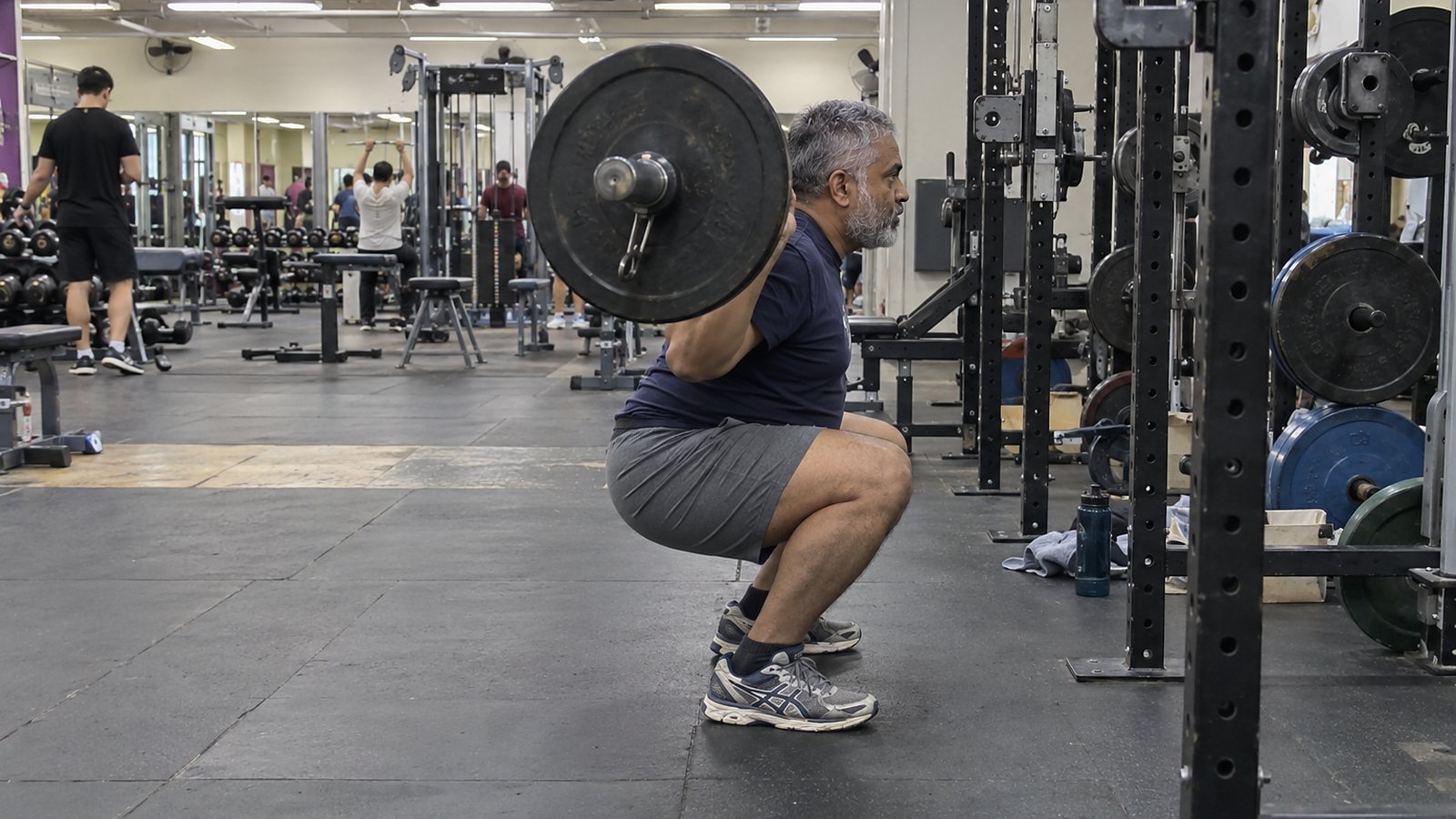
Good squat depth for most barbell training is at least parallel, with your hip crease level with or below the top of your knee.1 Go deeper if you can control it, and stop higher on purpose when your program or rehab plan calls for it.
If your squats stop short, you can build proper squat depth in small steps.
What counts as a parallel squat?
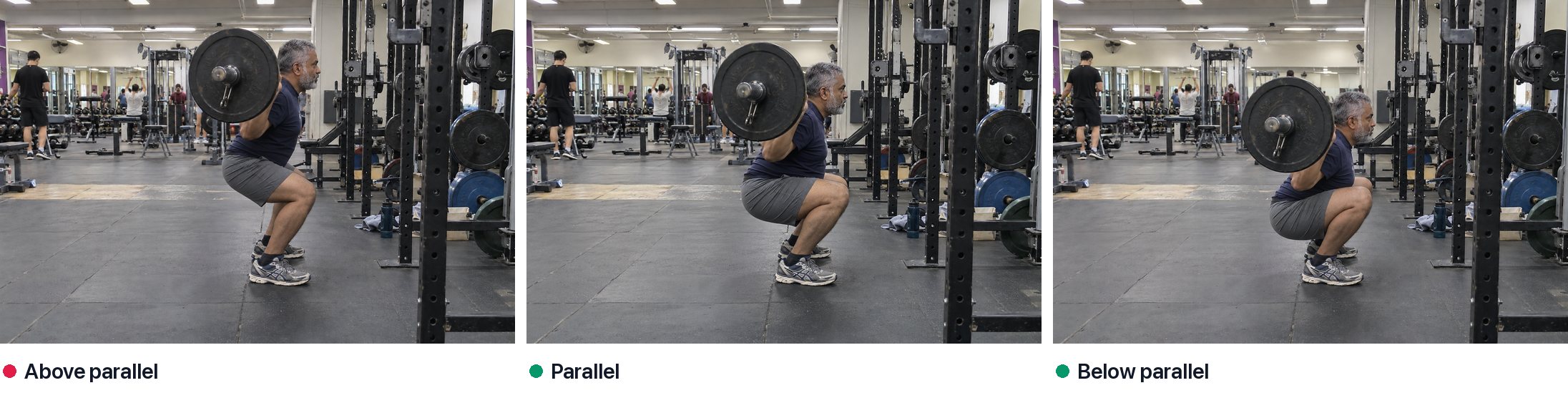
A parallel squat is one where, at the bottom, the crease at the front of your hip is level with the top of your knee. Coaches picture a line from the hip crease to the top of the kneecap: when it is level with the floor, you are at parallel, whatever your knee angle.2
Above parallel, the crease stays higher than the knee. When you squat below parallel, it drops lower than the top of the knee. That is the line powerlifting referees judge, and the USAPL rulebook names the hip crease as the landmark.3
How deep should you squat for your goal?
Squat to at least parallel unless you have a reason not to. Training through a full range of motion builds more strength and leg muscle than partial-range training.4 A shorter squat isn't a mistake when it's planned, for example as part of your program, a rehab plan or a step toward more depth.
How low should you squat beyond parallel? Proper squat depth past that line depends on your training goal.
Strength. You get strongest at the depth you train. After 12 weeks, lifters who trained shallow squats gained 36% on the shallow squat but only 9% on the deep one, while deep-squat trainees gained about 20% at both.5 In trained men, only full squats raised strength at all three depths tested, and half squats produced no gains.6
Muscle. In a 10-week study, full and half squats grew the quads equally, but full squats grew the glutes and inner thighs more.7 The 12-week study found more front-thigh growth from deep squats.5
Competition. Powerlifting needs your hip crease below the top of your knee, so train a little below parallel.
Rehab and pain. For pain at the front of the knee, clinicians generally prescribe shallow to medium-depth squats to keep joint stress down. With hip impingement or lower back pain, they limit depth to what the hip allows while the spine stays neutral.8 See a doctor or physical therapist if knee pain hasn't improved within a few weeks, and get urgent advice if your knee is very painful, badly swollen, locks, gives way or won't take your weight.9
Squat depth in powerlifting
In powerlifting, parallel isn't deep enough. The IPF squat depth rule requires the top surface of your thigh at the hip joint to drop lower than the top of your knees.10 USAPL squat depth is judged by the same test, with the hip crease named as the landmark.3 A crease level with the knee counts as parallel in training but fails the rule.
Three referees judge each attempt, and each shows a white light for a good lift or a red light for no lift.10 Train a little below the line so a slightly short rep still passes. CueForm checks your training depth against parallel. It does not certify competition depth; only the referees can decide that.
Why you stop short of parallel
Three reasons are common.
You thought you were already deep enough. You can't see your hip crease while you squat, so you judge depth by feel, and feel can drift. In one filmed coaching session, a lifter who hit depth on a box squatted higher once it was taken away.11
You get stuck or feel unsure at the bottom with this weight. You can load a half or quarter squat with more weight than you could take to full depth,12 so cutting the range is the easy way to finish a heavy rep. Hips shooting up first as you stand is a different fault: see how to fix good morning squats.
You tip backward, your heels lift, or your hips pinch. Hip sockets vary in shape and depth, which affects the stance width that suits you.13 A narrow stance also needs more ankle bend at the same depth.14 Stance width and toe angle change how your hips and knees move,15 so test a stance change first.
If going lower hurts, don't push through it. A physical therapist suggests a box at a shorter range, a lighter load with a slower tempo, or a variation that doesn't hurt.13
How to improve squat depth
One light set to a box at parallel tells you where to start. An easy touch points to fix 1, a stall to fix 3 with less weight, and tipping or a pinch to fix 2. Change one thing at a time.
1. Touch a box at parallel
Cue: Touch the box lightly on every rep, then stand straight back up.
Drill: Box squats to a parallel box. Set a stable box or bench where you would sit, and add firm mats until a light touch puts your hip crease level with the top of your knee, or just below if you compete. Use it for your warm-ups and first working set. Coaches use a box at the right depth as a target for lifters who squat too shallow,1 and keep the touch to a slight tap rather than a sit so the depth carries over to the free squat.11
Next filmed set: After two sessions where every rep touches, film your first set without the box, from the side. Every rep should still reach the top of your knee.
2. Find the stance that fits you
Cue: Take a wider stance, toes turned out, and sit down between your feet.
Drill: Start from the stance you would use to jump straight up, with your toes turned out a little. It usually lands a little wider than hip width.16 Do three slow bodyweight squats there, then at shoulder width, then a little wider, pointing your toes the way your knees travel. Keep the stance where your heels stay down deepest and your hips feel free. Lifters with limited ankle mobility or long thighs may do better with a wider stance.14 Squat stance widths: pros and cons explains what each width changes.
Next filmed set: Film a light set in the new stance from the side. Your heels should stay down, and your hip crease should reach your knee without a pinch.
3. Build depth in small steps
Cue: Touch the box on every rep, and lower it 2 cm each clean session.
Drill: Set the safety bars just below the bottom of your squat and take about 10% off your working weight. Set a box where your squat bottoms out today, and lower it about 2 cm once every rep of every set touches with control. Coaches use the same progression: start the box just above the depth where form breaks down, then lower it gradually toward full depth.1 Once you reach parallel, add pause squats: hold the bottom for two counts with your legs and trunk tight, then stand without a bounce. The pause removes the rebound, so you have to drive out of the bottom.17
Next filmed set: Film a set at the new box height. If a rep stalls, keep the box there for another session.
When depth shortens late in the set
Cue: Rack the bar after your last rep that reaches parallel.
Count only the reps that match your first rep's depth. Next session, end each set on the rep before depth shortened, and add a set to keep your total reps about the same. Reps slow down as fatigue builds,18 and a shorter rep is the easy way to finish a slow one. Film your last set and compare its final rep with the first.
See it in your own set
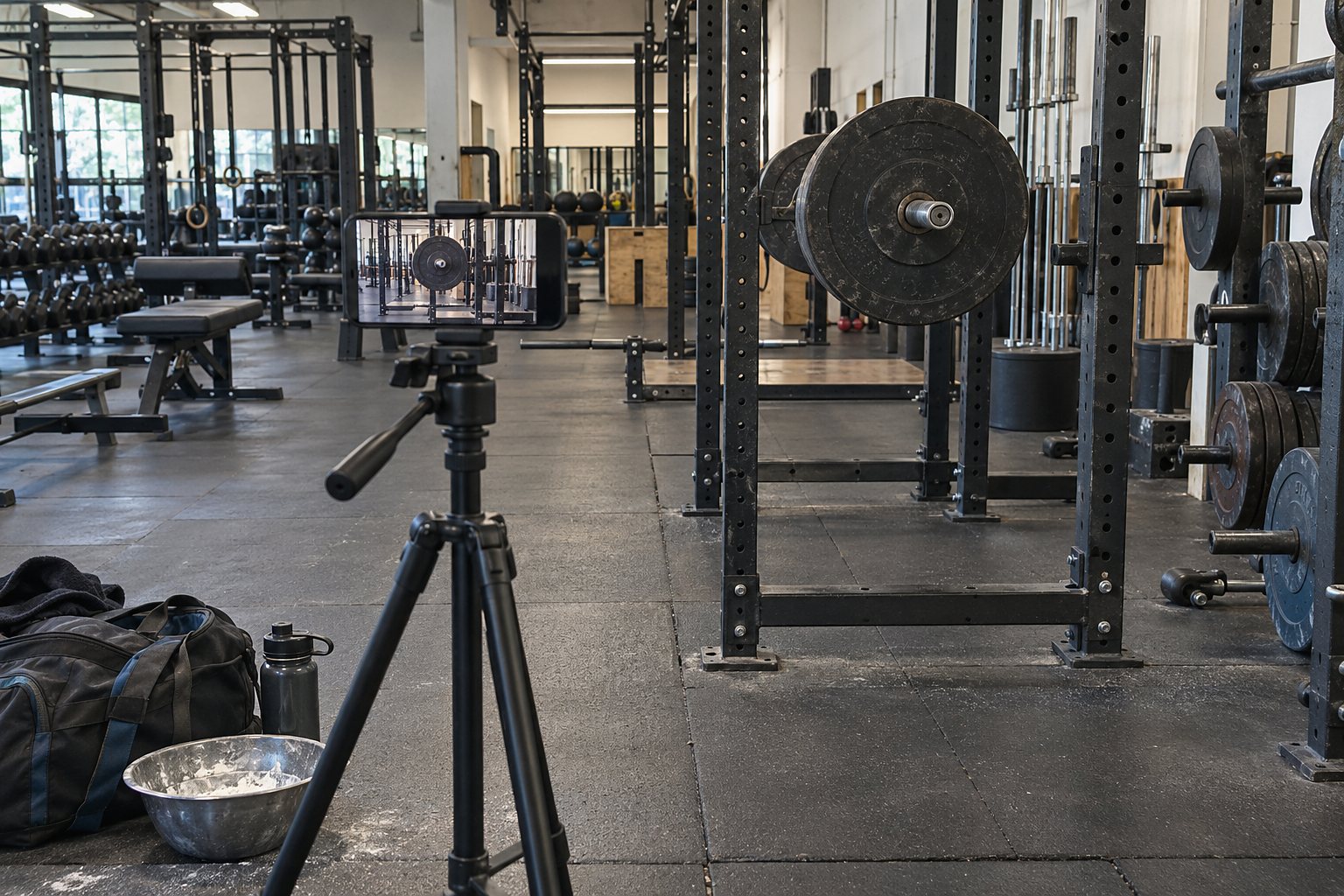
Depth is hard to judge while you squat, because you can't see your hip crease and a short rep can still feel deep. Film one set from the side at hip height, with your hips and knees in frame at the bottom of each rep. CueForm works as a squat depth checker for that video: it checks each rep's depth and shows the reps that stopped short of parallel. It asks what depth you were aiming for before suggesting a change. Check your squat depth from one video.
For setup and bracing, see the barbell back squat guide.
FAQ
Is it bad to squat below parallel?
No, if you control it and it doesn't hurt. In one study, full squats built more glute and inner-thigh muscle than half squats.7 You can go too deep for your hips, though. Past the end of your hip range, your pelvis tucks under and your lower back rounds,8 so stop just above that point.
Are deep squats bad for your knees?
Not for healthy knees, on current evidence. A 2013 review found deep squats don't raise injury risk to passive tissues when technique is coached and loads build gradually.12 An older review preferred parallel squats for healthy knees.19 If deep squats hurt, use a pain-free depth and see a physical therapist if the pain lasts.
Do you need to squat ass to grass?
No. An ATG squat, short for ass to grass, goes as deep as your hips and knees allow. Slightly below parallel meets the competition standard10 and trains a full range. Go deeper if you control it and it feels fine, and stop above the point where your pelvis tucks.
Why do my last reps get shallower?
Usually because the set got hard. Reps slow down as fatigue builds,18 and a shorter rep is easier to finish, since you can move more weight over a partial range.12 Treat your first rep's depth as the standard for the set, and rack the bar when a rep falls short of it.
Does my squat depth count in competition?
Only the referees can decide that on the day. IPF and USAPL rules need the top of your thigh at the hip to drop lower than the top of your knee.103 Train a little below parallel and film from the side to check. CueForm checks training depth; it does not certify competition depth.
Sources
-
Kushner AM et al. The back squat part 2: targeted training techniques to correct functional deficits and technical factors that limit performance. Strength and Conditioning Journal, 2015. ↩
-
elitefts. Box squat technique fix for athletes (opens in a new tab). Video, 2018. ↩
-
USA Powerlifting. Rulebook, version 2026.2, sections 4.1.4 and 4.2.1.1. In effect from 1 January 2026. ↩
-
Pallarés JG et al. Effects of range of motion on resistance training adaptations: a systematic review and meta-analysis. Scandinavian Journal of Medicine and Science in Sports, 2021. ↩
-
Bloomquist K et al. Effect of range of motion in heavy load squatting on muscle and tendon adaptations. European Journal of Applied Physiology, 2013. ↩
-
Pallarés JG et al. Full squat produces greater neuromuscular and functional adaptations and lower pain than partial squats after prolonged resistance training. European Journal of Sport Science, 2020. ↩
-
Kubo K, Ikebukuro T, Yata H. Effects of squat training with different depths on lower limb muscle volumes. European Journal of Applied Physiology, 2019. ↩
-
Straub RK, Powers CM. A biomechanical review of the squat exercise: implications for clinical practice. International Journal of Sports Physical Therapy, 2024. ↩
-
International Powerlifting Federation. Technical Rulebook, sections 2.8 and 4.1. Effective 1 March 2026. ↩
-
elitefts. Dave Tate's TOP squat cues (TYAO) (opens in a new tab). Video, 2022. ↩
-
Hartmann H, Wirth K, Klusemann M. Analysis of the load on the knee joint and vertebral column with changes in squatting depth and weight load. Sports Medicine, 2013. ↩
-
E3 Rehab. Pain with squats? (How to help) (opens in a new tab). Video, 2020. ↩
-
Demers E et al. The effect of stance width and anthropometrics on joint range of motion in the lower extremities during a back squat. International Journal of Exercise Science, 2018. ↩
-
Lorenzetti S et al. How to squat? Effects of various stance widths, foot placement angles and level of experience on knee, hip and trunk motion and loading. BMC Sports Science, Medicine and Rehabilitation, 2018. ↩
-
Juggernaut Training Systems. How do you find your right squat stance? (opens in a new tab) Video, 2025. ↩
-
Juggernaut Training Systems. Pause squat technique keys (opens in a new tab). Video, 2025. ↩
-
Sánchez-Medina L, González-Badillo JJ. Velocity loss as an indicator of neuromuscular fatigue during resistance training. Medicine and Science in Sports and Exercise, 2011. ↩
-
Escamilla RF. Knee biomechanics of the dynamic squat exercise. Medicine and Science in Sports and Exercise, 2001. ↩