CueForm training guides
Barbell Back Squat Form: Setup, Depth, and Common Mistakes
Five setup steps, three video checks, and one change to try on your next set.
Proper squat form in three cues
-
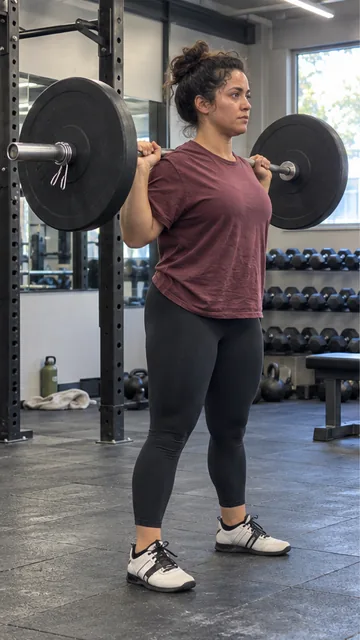 Plant your feet and brace
-
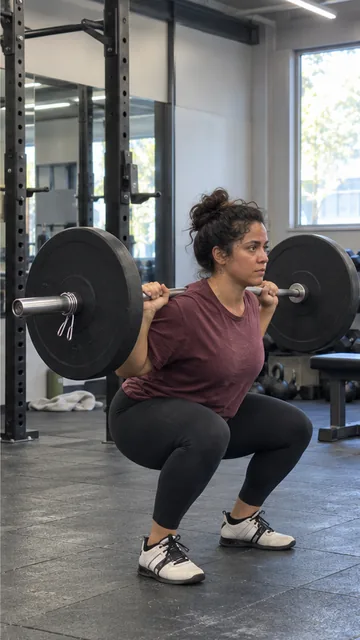 Sit between your legs
-
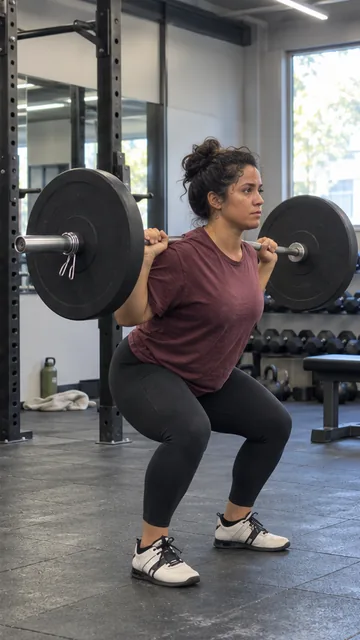 Stand with the bar
This guide covers the high-bar barbell back squat. A low-bar squat leans further forward, but the same video checks apply.
How to squat properly in five steps
New to squatting? Try a few bodyweight reps with your arms in front, feet planted and knees following your toes. The steps below add a barbell on your back.
-
Set the rack before adding weight
Put the hooks slightly below shoulder height so you can lift the bar out without rising onto your toes. Set the safeties just below your planned bottom position. Check both settings with an empty bar.
-
Make a shelf for the bar
For a high-bar squat, rest it across your upper traps, not your neck. Grip evenly and hold it securely against your upper back. Stand it out of the hooks, then take a couple of small steps back.
-
Find your squat stance and brace
Start around shoulder width with toes slightly out. Keep your heels and the bases of your big and little toes planted. Take a breath and tighten your trunk before you descend. More on breathing and bracing →
-
Bend your hips and knees together
Lower under control, letting your knees follow your toes. Aim toward thighs parallel to the floor while keeping your feet planted and trunk controlled. Start shallower if you lose that position; build a repeatable range before adding weight.
-
Push the floor away and stand
Let your hips and shoulders rise together. Keep your feet planted, finish standing, then reset your breath and brace. At the end, walk forward and settle the bar securely into both hooks.
You do not need to stay upright. Some forward lean is expected. A low-bar squat usually needs more than a high-bar squat; your proportions matter too. Watch for a change in your own position, rather than trying to match someone else's silhouette.
Watch a squat demonstration
Watch the setup and one complete rep, then try the steps with a light bar.
How to check your squat form on video
Film from the side around hip height, with your whole body and the bar in view. Watch the set at normal speed, then compare your first and last reps at these three moments.
01 / READY
Are your feet settled?
Finish the walkout before you descend. Look for a last-second shuffle or a heel lifting.
Fix heels or knees →02 / BOTTOM
Is your squat depth repeatable?
Compare the hip crease with the top of the knee. If clothing or the camera hides them, you can't judge depth from that clip.
Fix changing depth →03 / UP
Do your hips outrun the bar?
Watch the first part of the ascent. A new forward tip is different from the lean you had on the way down.
Fix early hip rise →Your stance, depth and torso angle may look different.
Need a better camera angle?
Use a steady side view to compare depth and ascent. Add a front-oblique view if you want to see both knees and feet; a side view can hide them. Keep the phone outside the rack and away from spotters.
Use the same angle for the next set. A camera move can make the bar path look different even when the lift has not changed. Full filming guide →
Want a second look? Upload your set for a free squat form check →
Common squat mistakes and how to fix them
Open the closest match and test one fix. If your reps stay balanced and consistent, you may not need a technique change.
Ready · BottomYour heels lift or your knees cave in
- Check
- Use a front-oblique view; a side view can hide your knees. Does it happen on every rep, or only near the end? Is your whole foot still planted?
- Try
- Lower the load and keep pressure through your whole foot. If the same pattern appears in warm-ups, test one small change to stance width or toe angle.
- Recheck
- Look for steadier foot contact and a smoother knee path at the same depth. Avoid forcing your knees as far out as possible. Footage alone cannot identify an ankle restriction or weak glutes.
For the causes and three fixes to try, read Knees caving in during squats.
BottomYour depth changes from rep to rep
- Check
- Can you see your hip crease and knee from the side? A high camera angle, loose clothing or a plate can hide them. Then compare the bottom of your first and last reps.
- Try
- Improve the view before changing your squat. Pick a controlled depth you can repeat, and reduce the load if later reps get shallower.
- Recheck
- Compare several reps from the same camera position. Do not add weight or force extra depth to satisfy an unclear frame.
To choose a depth and build toward it, read How deep should you squat.
UpYour hips shoot up and your chest drops
- Check
- Do your hips rise faster than your shoulders as you leave the bottom? Coaches call this a “good morning squat.” Compare it with your descent at the same height; a naturally inclined torso alone is not a mistake.
- Try
- Reduce the load and use one cue: “Bring your shoulders up with your hips.” Keep your chosen depth.
- Recheck
- Did the bar and your shoulders start rising with your hips? If you only fixed it by cutting the squat short, test a lighter load again. The video does not show which muscle is weak.
For why it happens and how much forward lean is normal, read Good morning squat: why your hips shoot up first.
Whole setLater reps look different
- Check
- Compare your first and last reps. Do they get shallower, does the bar tip forward over your toes, or do you rush the breath between reps?
- Try
- Use the same routine on every rep: breathe, brace, descend. If control keeps slipping, rack the bar and reduce the next set's load or reps.
- Recheck
- On which rep does the change start? Note any load change, too: an easier set can look better simply because it is easier.
Give your next set one job
Write down what you saw, change one thing, then film again. Keep the change only if the next set is more controlled at the depth you intended.
My hips rose first on reps four and five. I'll use a lighter load and bring my shoulders up with my hips, then compare those reps again.
Squat form questions
How deep should you squat?
Squat as deep as you can while your feet stay planted and your trunk stays controlled. For many lifters, that is thighs about parallel to the floor. Powerlifting competitions require more: the hip crease must drop below the top of the knee. Check depth from the side, with the camera at hip height.
Can my knees go past my toes?
Yes. Knee travel changes with bar position, stance and body proportions. Do not force your shins to stay vertical. Keep your feet planted and let your knees follow the direction of your toes.
What shoes should I wear to squat?
Wear a stable shoe with a firm sole. Squat shoes have a solid, raised heel, which helps many lifters reach depth with their heels down. Flat, firm trainers also work. Avoid soft, cushioned running shoes; they compress under the bar.
What is butt wink in a squat?
The term describes the pelvis tucking under near the bottom. A clip does not tell you whether it is harmful or what caused it. Check whether the change repeats with a lighter load, then test a small stance adjustment or a shallower controlled depth. Pain warrants an in-person assessment. The butt wink guide covers the causes and fixes.
Should I use high bar or low bar?
Both are back squats. High bar sits on the upper traps; low bar sits lower across the rear shoulders and usually involves more forward lean. Use the variation your program calls for, and compare your videos within that variation.
Not sure what to change first?
Upload the side-view video you filmed. Your first squat form check is free: it gives you one change to make first and how to apply it on your next set.
Check my squat →No payment needed.