Butt Wink: What It Looks Like, What Causes It and How to Fix It
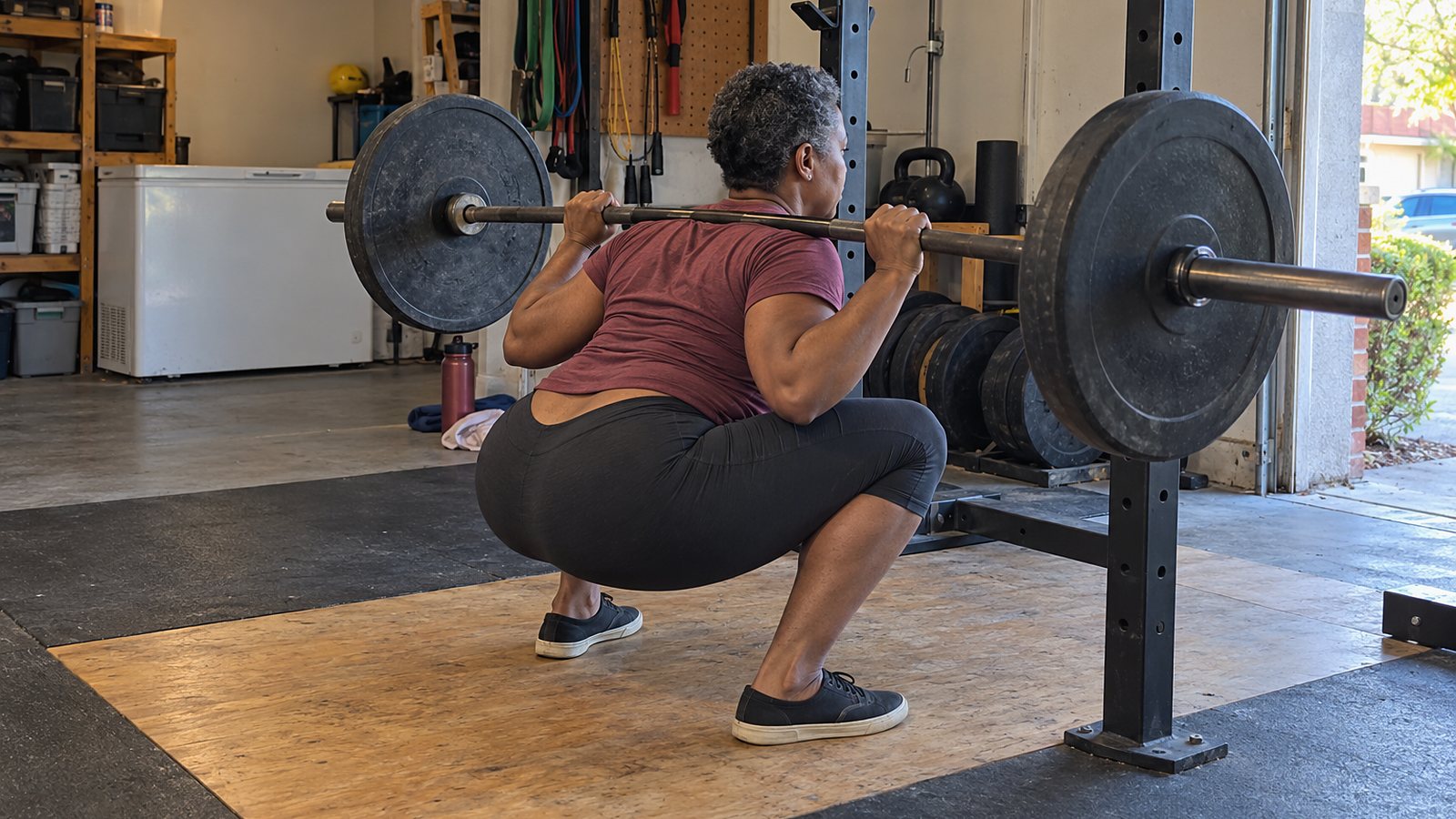
Butt wink is your pelvis tucking under and your lower back rounding at the bottom of a squat. A little butt wink in your squat at full depth is common, even in experienced lifters, and rarely the first thing to fix.1 It is worth working on when it grows as the bar gets heavier. The fix starts with seeing which reps it happens on, then testing your depth, stance and ankles one at a time.
What is butt wink?
Butt wink is the last part of the descent, when your pelvis rotates backward, your tailbone tucks toward the floor and your lower back flattens or rounds. The technical name is posterior pelvic tilt, and because your pelvis and lower back move together, the tilt comes with your lower back rounding.2
It happens near the bottom because your hips only bend so far. Once your thigh bone runs out of room in the hip socket, the extra depth comes from the pelvis rolling under.2 In one lab study of bodyweight squats, the pelvis started to tuck at about the same hip angle, around 110 degrees, whether people squatted flat-footed, squatted with their heels raised or lay on their back while a researcher bent their hip and knee. The authors concluded that the tuck makes up for hip bend once it has run out.3
What butt wink looks like on video
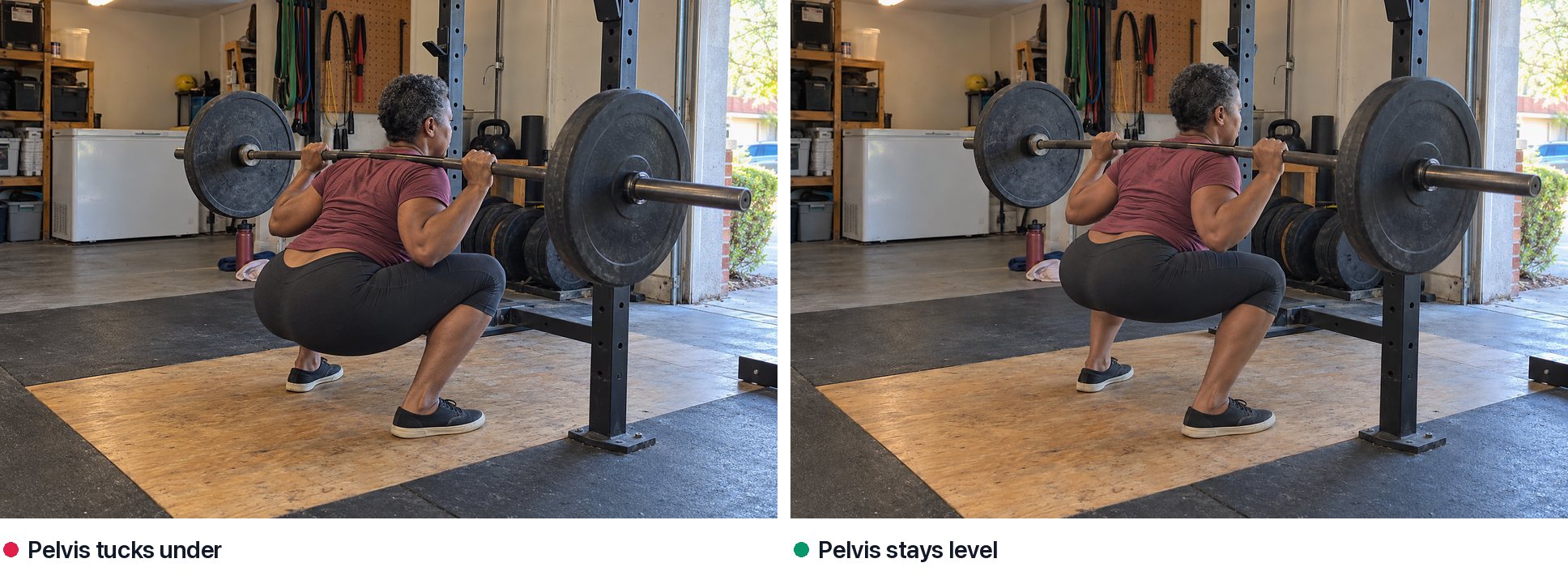
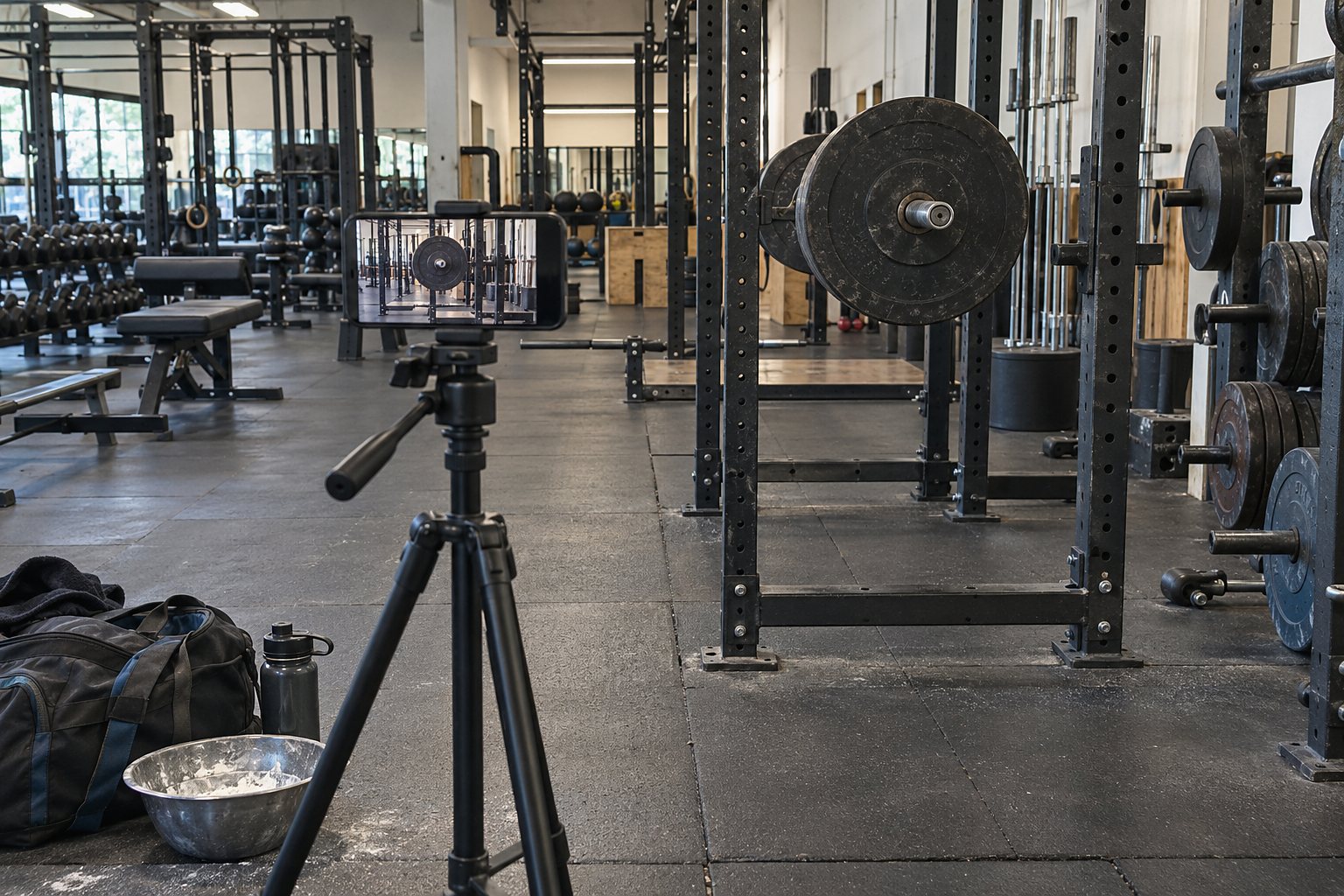
Butt wink when squatting is hard to feel, so film it. Put your phone at hip height, to the side of you or slightly behind the side, so your lower back is in view. Watch your waistband and lower back in the last few centimeters of depth. On a tucked rep, the waistband tips back and the curve in your lower back flattens just before you stand up. On a level rep, both hold their shape all the way down.
Many lifters describe the same thing as lower back rounding in the squat. Seven common squat form mistakes covers it alongside faults you may spot in the same video, such as heels lifting and forward lean.
Clothing hides it. A loose T-shirt or hoodie hangs over your lower back, so wear a fitted top tucked in for the filmed set. Then check the pattern: does the tuck show on every rep, only the deepest ones, or only as the set gets hard?
Is butt wink bad?
Usually not. Almost every lifter's lower back rounds a little at the bottom of a squat, and research on lifting hasn't linked that to back pain, though the evidence is thin. A large tuck under heavy weight is still worth reducing, because a rounded lower back handles compression less well than a neutral one.2
In a study of 18 experienced powerlifters and weightlifters squatting at 70% of their max, every lifter's lower back and pelvis flexed on the way down, by 18 degrees on average.1 Another study found trained lifters' lower backs rounded as soon as the bar was on their shoulders, and its authors questioned cues to keep the lower back arched throughout.4 A review of 11 studies on lifting in general found low-quality evidence that more lower back bending was not a risk factor for back pain starting or persisting.5
The case for reducing a large tuck rests on mechanics rather than injury studies. Reaching a position by rounding the lower back lowers how much compression it tolerates, and a recent review advises lifters with back pain to squat only as deep as they can keep a neutral spine.2
Use your video to decide. A tuck in the last few centimeters of a light set is low priority. A tuck that starts higher in the descent or grows as the weight goes up is worth working on.
What causes butt wink
Three causes are worth testing.
You go deeper than your hips allow in that stance. Hip sockets vary. A deeper socket stops the thigh bone bending as far, and stretching cannot change that bony limit.6 If your squat goes past the point where your hips run out, the pelvis tucks to find the rest of the depth.3
Your stance width and toe angle don't suit your hips. Stance width and foot angle change how your hips, knees and trunk move and how much load they take. Researchers who compared nine combinations advise special care at the extremes: a narrow stance with the toes turned far out, or a wide stance with the toes straight ahead.7 A stance that suits your hips lets them bend further before the pelvis has to tuck. Some lifters get stuck partway down with their toes pointing forward and squat deeper once they turn them out a little, because of how their hips are shaped.8
Your ankles run out of range. A narrower stance needs more ankle bend at every depth.9 When your ankles stop bending, your knees stop traveling forward and more of the depth has to come from your hips, so they run out sooner. In the lab study above, raising the heels let people squat much deeper before the pelvis started to tuck, with their knees and ankles taking more of the depth.3
How to fix butt wink
Treat each fix as a test. Change one thing, film a light set from the side, and keep the change if your pelvis stays level deeper than before. The first two are set-up habits that help prevent butt wink before it starts. The third trains depth you control. Stop any of them if the bottom of the squat hurts.
1. Find your stance and turn your toes out
Cue: Take a wider stance, toes turned out, and sit down between your feet.
Drill: Start from the stance you would use to jump straight up, with your toes turned out a little.10 Do three slow bodyweight squats there, then at shoulder width, then a little wider, pointing your toes the way your knees travel. Keep the stance where your hips feel free and your pelvis stays level the deepest. The quadruped rock-back test runs the same comparison on all fours, and squat stance widths: pros and cons explains what each width changes.
Next filmed set: Compare the new stance with your old one at the same depth. The tuck should start later, look smaller or be gone.
2. Raise your heels
Cue: Stand your heels on lifting shoes or two equal weight plates.
Drill: Film one light set in your usual setup and one with your heels raised, both from the side. Use nothing that can wobble or slide. Raised heels let your knees travel further forward, so you can reach more depth before your hips run out.3 In a coaching demonstration, a lifter in weightlifting shoes squatted deeper with a more upright chest.11 They are not a guaranteed fix: a 2.5 cm heel wedge reduced forward lean in trained lifters but did not change how much their lower back bent relative to the pelvis.12
Next filmed set: Check whether your pelvis stays level to the same depth or lower with your heels raised. If it does, use the raised heels for your working sets.
3. Squat to a box at the depth you control
Cue: Touch the box lightly on every rep, then stand straight back up.
Drill: Set the safety bars just below the bottom of your squat. From your video, find the depth where the tuck starts, and set a box just above it. Touch it lightly on every rep without sitting, rocking or bouncing. Strength coaches use the same rule: set the box slightly above the depth where the fault appears, then lower it gradually toward full depth.13 When every rep of every set touches with your pelvis level, lower the box about 2 cm for the next session. If you're unsure how deep you need to go, the squat depth guide covers the standards.
Next filmed set: Check that your pelvis stays level at the box height. When the box sits where you want your depth, do one set without it and see whether the depth holds.
See it in your own set
Butt wink happens in the last few centimeters of depth, which makes it hard to judge while you lift. Film one set from the side or slightly behind the side, at hip height, with your lower back clear of clothing. CueForm marks the reps where your pelvis tucks at the bottom and shows them in your own video, alongside depth and heel checks. Check your squat for butt wink from one video.
For setup, bracing and the rest of the lift, see the barbell back squat guide.
FAQ
Is a little butt wink okay?
Yes, for most lifters. A small tuck in the last few centimeters of a deep squat is normal, even in experienced lifters.1 Work on it if it starts higher in the descent or grows as the weight goes up, and film a set every few weeks to check.
Does butt wink cause back pain?
Research hasn't shown that it does.5 If your back hurts when you squat, cut the depth or the load to a range that doesn't hurt. See a doctor or physical therapist if the pain hasn't eased after a few weeks, is worse at night, or comes with numbness, tingling or weakness in your legs.14
Can tight hamstrings cause butt wink?
The evidence points elsewhere. The hamstrings cross the hip and knee, so a bent knee takes tension off them.6 Yet the tuck started at the same hip angle in a squat as when people lay back with their knees bent.3 In experienced lifters, straight-leg hip bend didn't predict how much the lower back rounded in the squat.1
Does ankle mobility affect butt wink?
It can, though not always the way people expect. Raising the heels let people squat deeper before the tuck began.3 But in experienced lifters, those with more ankle range rounded their lower back more, not less.1 Judge it by your video: if raised heels get you lower with your pelvis level, your ankles were part of the limit.
How do I know if I have butt wink?
Film a set from the side or slightly behind it, at hip height, with your lower back visible. Watch your waistband in the last few centimeters of depth. If it tips back and your lower back flattens just before you stand up, that's butt wink. Note which reps it shows on.
Sources
-
Berglund L et al. Are anthropometric measures, range of motion, or movement control tests associated with lumbopelvic flexion during barbell back squats? International Journal of Sports Physical Therapy, 2024. ↩
-
Straub RK, Powers CM. A biomechanical review of the squat exercise: implications for clinical practice. International Journal of Sports Physical Therapy, 2024. ↩
-
Mata AJ et al. Hip flexion angles during supine range of motion and bodyweight squats. International Journal of Exercise Science, 2021. ↩
-
McKean MR, Dunn PK, Burkett BJ. The lumbar and sacrum movement pattern during the back squat exercise. Journal of Strength and Conditioning Research, 2010. ↩
-
Saraceni N et al. To flex or not to flex? Is there a relationship between lumbar spine flexion during lifting and low back pain? A systematic review with meta-analysis. Journal of Orthopaedic and Sports Physical Therapy, 2020. ↩
-
Myer GD et al. The back squat: a proposed assessment of functional deficits and technical factors that limit performance. Strength and Conditioning Journal, 2014. ↩
-
Lorenzetti S et al. How to squat? Effects of various stance widths, foot placement angles and level of experience on knee, hip and trunk motion and loading. BMC Sports Science, Medicine and Rehabilitation, 2018. ↩
-
Squat University. How to squat for your anatomy (toes out?) (opens in a new tab). Video. ↩
-
Demers E et al. The effect of stance width and anthropometrics on joint range of motion in the lower extremities during a back squat. International Journal of Exercise Science, 2018. ↩
-
Juggernaut Training Systems. How do you find your right squat stance? (opens in a new tab) Video. ↩
-
Squat University. How to squat for your anatomy (depth?!) (opens in a new tab). Video. ↩
-
Charlton JM et al. The effects of a heel wedge on hip, pelvis and trunk biomechanics during squatting in resistance trained individuals. Journal of Strength and Conditioning Research, 2017. ↩
-
Kushner AM et al. The back squat part 2: targeted training techniques to correct functional deficits and technical factors that limit performance. Strength and Conditioning Journal, 2015. ↩