How AI Tracks Squat, Bench, Deadlift Progress
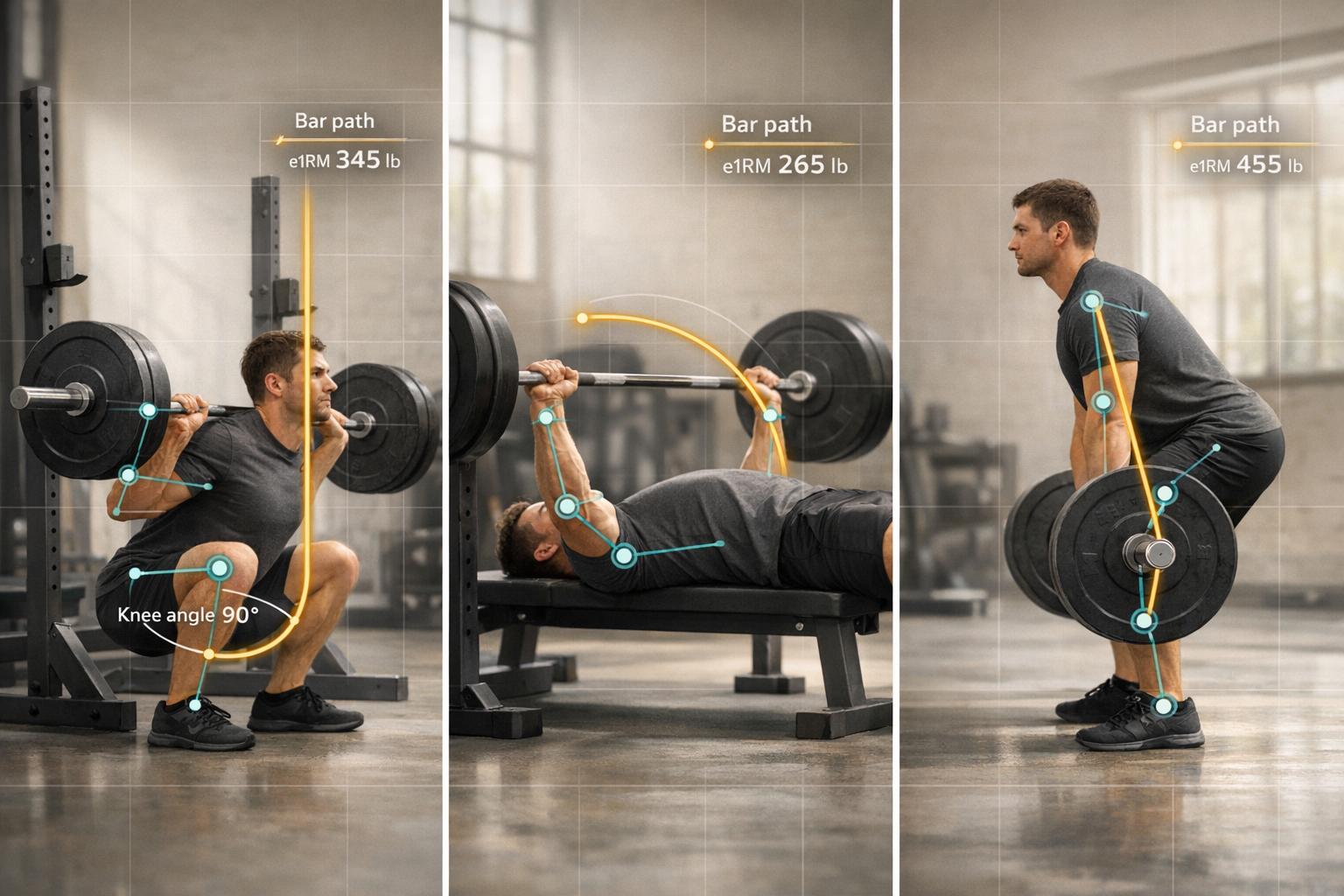
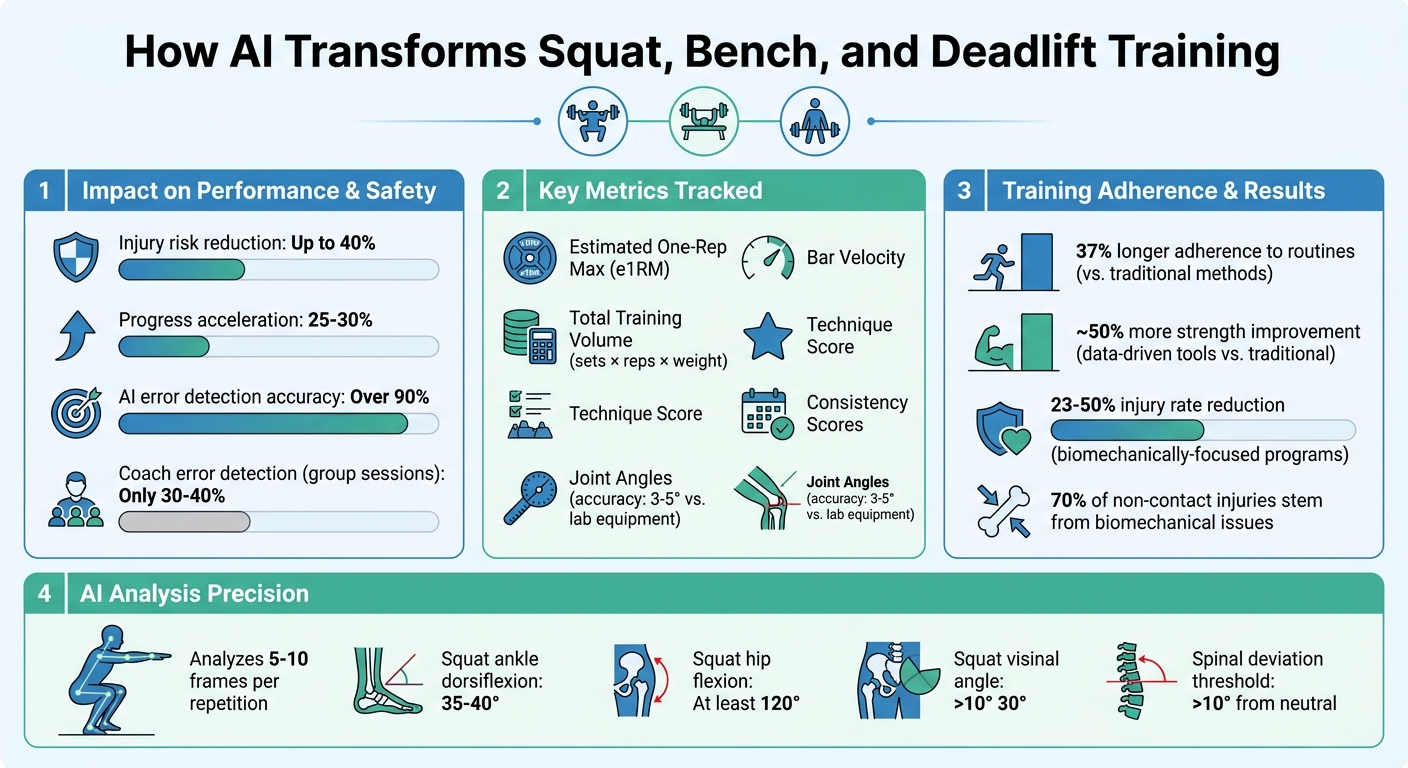
AI tools like CueForm AI are transforming strength training by offering precise feedback on your squat, bench press, and deadlift form. By analyzing video footage, these systems track joint angles, bar paths, and body positioning to identify errors and suggest specific adjustments. This helps improve technique, reduce injury risks by up to 40%, and accelerate progress by 25–30%. You can also track metrics like estimated one-rep max (e1RM), bar velocity, and consistency scores to monitor gains over time. With features like annotated video feedback and detailed reports, AI ensures every rep counts while keeping you safe and progressing efficiently.
AI-Powered Strength Training: Key Benefits and Performance Metrics
How AI Analyzes Form and Technique
Understanding Movement Patterns Through AI
AI relies on advanced pose estimation models like MediaPipe, OpenPose, and MoveNet to map joint coordinates and track movements in video footage. These systems pinpoint key landmarks - such as shoulders, hips, knees, and ankles - and follow their motion across each repetition. By analyzing these landmarks, the technology calculates biomechanical variables that help ensure safe and effective lifting.
Take squats, for example. AI measures critical joint angles, including those of the knee, hip, and ankle, to confirm proper form. A good squat typically requires around 35–40° of ankle dorsiflexion and at least 120° of hip flexion. It also monitors the barbell's path, ensuring it moves vertically and consistently. Any deviation, like drifting or bouncing at the bottom, can indicate inefficiencies that may hinder strength gains. This precise tracking enables tailored adjustments during training.
To provide even more context, multimodal vision-language models analyze 5–10 frames per repetition, adapting feedback based on your filming angle. CueForm AI, for instance, uses this approach to offer insights that align with your setup - whether you're recording side-on or at a slight angle.
This level of analysis helps lay the groundwork for identifying and correcting form issues.
Detecting Form Errors and Deviations
AI has a knack for spotting subtle mistakes that even experienced coaches might overlook. Research shows that coaches catch only 30–40% of form errors during group sessions [2]. In comparison, AI achieves over 90% accuracy in identifying major errors, such as knee valgus (knees caving inward) or spinal flexion (back rounding) [1].
For squats, AI can pinpoint problems like uneven depth - where one hip sits 2–3 inches higher than the other - or "stripper squats", where the hips rise faster than the shoulders (the ideal ratio is 1:1). It also detects dynamic valgus during the ascent, a key warning sign for potential ACL injuries. When analyzing the bench press, the system evaluates elbow alignment, tracks bar path drift, and checks for improper techniques like bouncing the bar off the chest. For deadlifts, AI monitors spinal flexion by measuring the thoracic curve, flagging deviations greater than 10° from neutral. It also identifies premature hip elevation, where the hips rise before the shoulders.
CueForm AI goes a step further by not just identifying these issues but explaining them. For example, it might highlight that your "right hip is 2 inches higher", offering clear, data-driven insights to help you improve.
Providing Real-Time and Post-Session Feedback
Personalized Technique Cues
Accurate feedback is key to reducing injury risks and improving performance. Building on earlier error detection, AI transforms biomechanical data into practical advice. Instead of vague suggestions, you'll get specific cues like "keep your knees out" or "push through your heels." These tips are tailored to your unique body structure (like femur length), training goals (e.g., powerlifting versus general strength), and stance preferences.
CueForm AI delivers this feedback as actionable "next rep" guidance, explaining what to adjust, why it’s important, and how it should feel during the movement. If something doesn’t make sense, you can ask the AI coach for clarification (e.g., "What should I feel here?") and get alternative explanations.
To ensure you're not just following instructions blindly, the system also shows key metrics - like knee alignment or bar path - behind each cue. This way, you’ll understand the reasoning behind the adjustments.
Visual and Written Feedback Outputs
Beyond personalized cues, AI provides feedback in both visual and written formats. Annotated video frames highlight joint angles and bar paths directly on your footage. Performance levels are color-coded (excellent, mid-range, or needs improvement), giving you an immediate visual snapshot of how each rep measures up.
Written reports break down your sets into detailed sections, listing corrections, the causes of errors, and suggested strategies. CueForm AI offers two types of feedback: quick checks with essential suggestions and in-depth reports that analyze metrics like bar path consistency, touch points for bench presses, or hip hinge mechanics for deadlifts. The free plan includes unlimited quick feedback with clear explanations, while the Starter plan ($10/month or $89/year) gives you access to unlimited detailed reports and extended AI coach chat capabilities.
This mix of visual annotations and written insights allows you to review your form from different perspectives, making it easier to apply corrections in your next workout.
Using AI to Detect Proper Exercise Form Tutorial
Tracking Progress with Key Performance Metrics
AI takes real-time performance cues and turns them into actionable insights by tracking key metrics to measure your progress.
Metrics for Strength Progress
Traditional methods often overlook critical details in strength tracking. AI, however, monitors estimated one-rep max (e1RM), total training volume (calculated as sets × reps × weight), and bar velocity to give you a clearer picture of your progress. For example, bar velocity is an early indicator of fatigue. If the speed of your squat bar slows down beyond a certain point during a set, the AI flags it, helping you avoid overloading your central nervous system [5].
Velocity-Based Training (VBT) is another game-changer. By using your smartphone to measure bar speed, it estimates e1RM without requiring you to lift your absolute max. Research backs this up: people using data-driven fitness tools stick to their routines 37% longer and see about 50% more strength improvement compared to those using traditional methods [4].
This level of detail not only tracks your strength gains but also ensures your form remains consistent over time.
Technique and Consistency Scores
Strength isn’t just about raw numbers - it’s also about the quality of your movements. CueForm AI evaluates this by assigning a Technique Score based on factors like range of motion, bar path stability, and joint alignment. For example, it checks for proper knee tracking during squats or correct elbow positioning in bench presses. Only technically sound reps are scored, cutting out "junk volume" caused by partial or sloppy movements.
These scores help you spot patterns in your performance. If your squat depth varies or your bench press bar path shifts during heavy lifts, the AI highlights these issues, allowing you to address them before they turn into bad habits. It also keeps tabs on movement balance, such as the ratio of push-to-pull or hinge-to-squat exercises, ensuring you’re not overworking some muscles while neglecting others.
Optimizing Training with AI Insights
Building on precise form analysis and progress tracking, AI takes your training to the next level by tailoring your plan with smart adjustments and recovery monitoring. It doesn’t just track your performance - it guides your journey by knowing when to push harder or ease up, ensuring consistent progress without risking burnout. By using detailed metrics and identifying errors, AI fine-tunes your training for maximum results.
Adjusting Intensity and Volume
Strength grows through progressive overload, which means gradually increasing the demands of your workouts. AI tracks your Volume Load (sets × reps × weight) over 4–8 weeks to detect trends and potential plateaus. Based on this data, it adjusts the intensity and volume of your upcoming sessions to keep you progressing [6][3].
Rate of Perceived Exertion (RPE) is a key factor here. If a weight starts to feel easier (lower RPE), AI suggests increasing intensity in your next workout [6][3]. This adaptive approach ensures you're always training at the right level. AI also organizes your workouts into different phases - hypertrophy, strength, peaking, and deload - automatically shifting the workload to boost gains while avoiding overtraining [6].
AI goes beyond numbers by analyzing your form through video. For example, if your deadlift lockout is consistently weak, it adjusts your accessory exercises to target that specific issue. This level of customization offers a step up from general error detection, focusing on your unique needs [6].
Recognizing Recovery and Readiness Signals
While adjusting workloads is essential for progress, monitoring recovery is just as critical for staying safe and effective. Knowing when to push and when to rest can make or break your results. AI keeps an eye on readiness signals, such as sudden drops in performance or struggles during normally manageable sessions [6][3]. For instance, if your bar speed slows down on weights you usually lift with ease, the AI flags this as a sign of fatigue or overtraining [7][8].
"Strenuous training without proper recovery leads to overtraining and reduced performance." - Marci A. Goolsby, MD, Medical Director of the Women's Sports Medicine Center at HSS [8]
Advanced systems can even incorporate biometric data like Heart Rate Variability (HRV), resting heart rate, and sleep quality to determine if you’re ready for an intense session or need to scale back [7][8]. When fatigue builds up, the AI steps in with recommendations for deload weeks or extended rest to prevent long-term setbacks [7]. By syncing wearable devices with your AI platform, you get even more precise readiness scores, helping you steer clear of the prolonged recovery periods that overtraining syndrome can demand [7][8].
Reducing Injury Risks with AI
AI doesn’t just improve performance - it also helps keep you injury-free by ensuring proper form and catching errors early.
Good form isn’t just about lifting heavier; it’s about staying healthy enough to train consistently over time. AI acts as a safeguard, identifying faulty movement patterns before they lead to chronic injuries. Research backs this up: biomechanically focused training programs can cut injury rates by 23% to 50% [9], and around 70% of non-contact musculoskeletal injuries stem from biomechanical issues [9].
Form Consistency for Safe Training
AI ensures every rep meets quality standards by tracking metrics like joint angles and bar path. Pose estimation systems, for example, can measure joint angles with an accuracy of 3–5° compared to gold-standard motion capture [9]. This means you can get lab-level feedback right from your smartphone. Platforms like CueForm AI (https://cueform.ai) let you upload your training videos for detailed analysis, flagging issues like knee valgus, back rounding, or improper elbow positioning.
But it doesn’t stop there. The platform provides clear, actionable feedback, explaining exactly which metrics triggered alerts. For instance, if your deadlift shows excessive spinal rounding, the AI flags the issue and offers a simple cue to fix it in your next set. It also identifies compensatory patterns that could undermine your long-term progress.
Early Detection of Compensatory Movements
When your primary muscles can’t handle the load, your body recruits secondary muscles to compensate - a common cause of injury. AI excels at spotting these subtle deviations, which even seasoned lifters might overlook.
A 2020 study in the Journal of NeuroEngineering and Rehabilitation demonstrated AI’s effectiveness in detecting compensatory motions. Using a Support Vector Machine classifier, researchers achieved an impressive F1-score of 0.95. When real-time feedback was introduced, compensatory movements dropped significantly (p < 0.001) [10]. AI can monitor left-right imbalances, detect uncontrolled or jerky movements, and flag incomplete ranges of motion.
"AI systems interrupt the pathway from poor form to chronic injury by catching and correcting technical movement errors." - Gymijet [9]
CueForm AI takes it a step further with its Coach AI chat feature. Say the system spots excessive forward knee travel during a squat. You can ask follow-up questions like, “What should I feel?” to better understand the correction. This interactive approach helps you learn proper mechanics, rather than just following instructions.
To make it accessible, CueForm AI offers a Free plan with unlimited quick feedback and explainable findings. For those wanting more, the Starter plan ($10/month or $89/year) includes unlimited detailed reports and extended AI chat features for deeper analysis.
Conclusion
AI is reshaping the way lifters monitor their progress in the squat, bench press, and deadlift. Gone are the days of relying solely on mirrors or subjective feedback. Now, you can access precise, data-driven analysis that captures biomechanical details often missed by the human eye. This technology not only pinpoints where your form falters but also explains why and offers practical cues to fix it.
But it’s not just about refining technique. By combining strength metrics with scores for form and consistency, AI gives you a well-rounded view of your progress. Even if your bar weight stalls, improvements in form and consistency can keep your motivation high.
Perhaps most importantly, these insights contribute to safer training. AI plays a key role in reducing injury risks by identifying issues like knee valgus, spinal rounding, or poor bar path alignment early on. By addressing these problems proactively, you can stay healthy and maintain consistent training for the long haul.
FAQs
How should I film my lifts for the most accurate AI feedback?
To ensure precise AI feedback on your lifts, make sure to record videos that are clear and well-lit, capturing your entire body. Position the camera on a stable surface, aiming for angles from the front and side. Avoid any obstructions that might block the view of your movements. High-quality footage allows the AI to accurately assess key details like posture, bar path, and joint angles, so it can deliver tailored advice to refine your technique.
How accurate are AI joint-angle and bar-path measurements from a phone video?
AI-based joint-angle and bar-path measurements from phone videos are generally accurate enough to provide helpful feedback. That said, their precision can depend on factors such as the quality of the video and how complex the exercise is.
How do I use technique scores and bar speed to adjust my training week to week?
Technique scores evaluate how well you move, while bar speed reflects your power and explosiveness. After each workout, take a moment to analyze these metrics:
- When technique scores improve and bar speed remains consistent, consider increasing the intensity or volume of your training.
- If technique scores decline or bar speed decreases, it’s a sign to scale back the load or volume to prioritize recovery and fine-tune your form.
This approach helps you make consistent progress while keeping injury risks low.