CueForm training guides
Bench Press Form: Setup, Bar Path, and Common Mistakes
Build a steady setup, find a repeatable touch point, and check what changes on video.
Proper bench press form in three cues
-
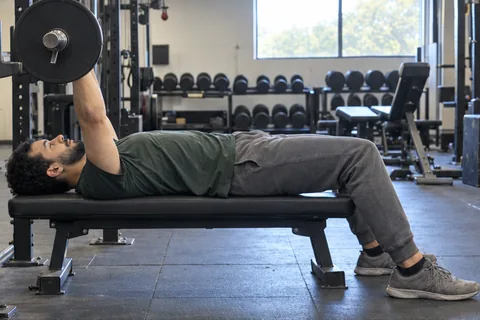 Set your support
-
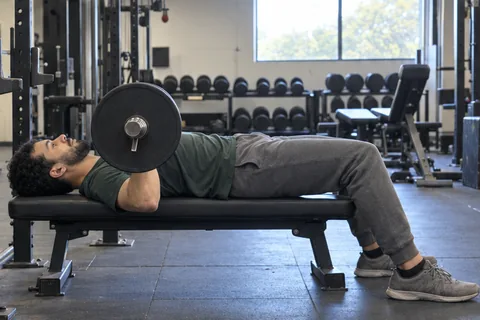 Control the touch
-
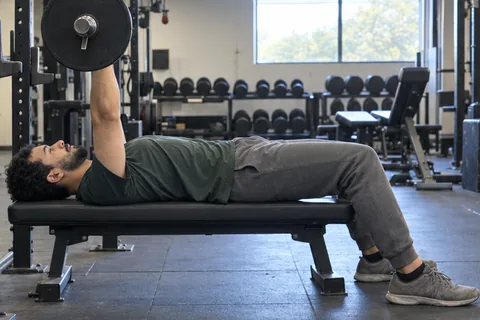 Press up and slightly back
This guide covers the flat barbell bench press. Set up a spotter or rack safeties before you start.
How to bench press in five steps
Start with a light bar, and practice each step before you add weight.
-
Make room for a missed rep
Use a capable spotter or a rack with safeties. Set the safeties just below your normal chest touch height, high enough to keep a missed bar off your neck. Test with an empty bar. Agree on the handoff and when your spotter should help.
-
Set your feet and upper back
Lie with your eyes roughly below the racked bar. Plant both feet and draw your shoulder blades together against the bench. Keep your head, upper back and butt supported. Use a comfortable arch you can maintain.
-
Set your grip and wrist position
Start a little wider than shoulder width, thumbs wrapped around the bar. Set it low in your palms, over your forearms. Brace and bring the bar out over your shoulders with straight arms; a handoff can help you keep your upper-back position.
-
Lower to a repeatable touch point
Lower under control to your mid-to-lower chest. Let your elbows bend beneath the bar rather than forcing them to a fixed angle. Touch gently without bouncing. Your grip and proportions affect the exact contact point.
-
Press up and slightly back
Push toward a finish over your shoulders, keeping your feet planted and butt on the bench. Finish with straight arms. After the final rep, move back to the hooks and keep your grip until the bar is securely racked.
The bar does not need to travel straight up. It touches your chest below the shoulder line and returns toward your shoulders. Do not copy the vertical path you would look for in a squat or deadlift.
Watch a bench press demonstration
Watch the setup, chest contact and return to the top before practicing with a light bar.
How to check your bench press form on video
Use a steady side or slight side-oblique view that includes the bar, torso, hips and feet. Keep the phone clear of the rack and your spotter. Compare your first and last reps at these three moments.
01 / SUPPORT
Does your setup stay put?
Compare the first and last reps. Look for your feet shifting or your butt lifting as you press.
Fix moving feet or hips →02 / TOUCH
Does the bar meet the same area?
Watch for a touch point that wanders up your chest, or a descent that speeds into a bounce.
Fix a wandering touch point →03 / PRESS
Where does the bar finish?
It should return toward your shoulder line. Look for later reps drifting toward your feet instead.
Fix bar drift →Your grip and proportions change the exact touch point.
What can this camera angle miss?
A side view can hide the far wrist or foot. If you are checking forearm alignment, add a view from near the foot end, outside the lifting area. Do not put the camera where a spotter needs to stand.
Video shows visible motion. It cannot confirm muscle activation or the exact position of shoulder blades hidden against the bench. Full filming guide →
Want a second look? Upload your set for a free bench press form check →
Common bench press mistakes and how to fix them
Open one pattern and test one change. A slow final rep is not automatically a form problem.
SupportYour feet move or your butt lifts
- Check
- Does contact change from the first rep, or only when the set gets difficult? Make sure the camera shows the bench edge and both feet.
- Try
- Rehearse a lighter set with your feet planted before the unrack. Use leg drive, pressing through your feet without lifting your butt; test a small foot-position adjustment if needed.
- Recheck
- Can you press while keeping the same contact points? End the set before you have to abandon that position.
TouchYour touch point changes or the bar bounces
- Check
- Is the contact point moving, or is your torso moving underneath it? Compare the bar with the same part of your chest on each rep, and watch for a descent that speeds into a bounce.
- Try
- Use a lighter load and a controlled descent with a brief, gentle pause at the chest. Keep the same grip and setup.
- Recheck
- Can you touch the same area without bouncing or lifting your chest to meet the bar? Once the path is repeatable, return to your planned tempo.
TouchYour wrists bend back or your elbows flare out
- Check
- Is the bar sitting toward your fingers? Can you see your wrist and elbow clearly enough to judge them? One oblique frame can be misleading.
- Try
- With a light bar, reset it low in your palm, thumbs wrapped around it. Check grip width and touch point together so your forearms are roughly upright at the bottom.
- Recheck
- Use side and foot-end views. Look for steady wrists rather than chasing an exact elbow angle. If the position hurts, stop and get it assessed.
PressThe bar drifts toward your feet as you press
- Check
- After the touch, does the bar move forward toward your feet before it goes up? From the side, compare where each rep finishes with your shoulder line.
- Try
- Keep your forearms vertical at the bottom, then press up and slightly back toward your shoulders. Use a lighter load until the path repeats.
- Recheck
- Does the bar finish over your shoulders on every rep, including the last one?
Give your next set one job
Keep the same camera angle and change one thing. Compare the result at the same point in the rep, not just the weight you managed to lift.
My touch point moved toward my neck on the last two reps. I'll lower the weight and pause gently at the same chest spot, then film again.
Bench press form questions
How wide should my bench press grip be?
Start slightly wider than shoulder width. At chest contact, check whether your forearms are roughly upright from the side and foot end. Adjust grip and touch point together with a light load; a fixed hand spacing will not suit everyone.
Where should my feet go when I bench?
Plant both feet flat on the floor, wide enough to feel stable, and keep them still from the unrack to the last rep. Press through them without lifting your butt off the bench. Foot position changes how your arch feels, so test small changes with a light bar.
Should I pause the bar on my chest?
A brief pause makes your touch point easier to check and control, and powerlifting competitions require one. Touch-and-go reps let you lift a little more, but they make bouncing easier. Either works for training if the bar touches gently.
Is a bench press arch a mistake?
A comfortable arch established during setup is different from lifting your butt to finish a rep. Keep the position controlled and your support points steady. You do not need to copy an extreme competition arch to learn the lift.
Should I tuck or flare my elbows?
Let your elbows move beneath the bar, with your forearms roughly upright at chest contact. Grip width and touch point affect how much they tuck. Check those together instead of pinning your elbows to your sides or forcing one angle on every lifter.
Not sure what to change first?
Upload the side-view video you filmed. Your first bench press form check is free: it gives you one change to make first and how to apply it on your next set.
Check my bench press →No payment needed.