HRV Monitoring for Squat, Bench, and Deadlift
HRV (Heart Rate Variability) helps lifters track central nervous system (CNS) recovery. While muscles may recover in 48 hours, CNS fatigue can last 72+ hours after heavy lifts (≥85% of 1RM). Monitoring HRV allows you to adjust training intensity based on readiness, avoid overtraining, and reduce injury risk. Here's what you need to know:
- Heavy lifts (squats, bench, deadlifts) suppress HRV for 24–72 hours; 1RM attempts can extend this to 3–5 days.
-
Morning HRV readings guide daily intensity:
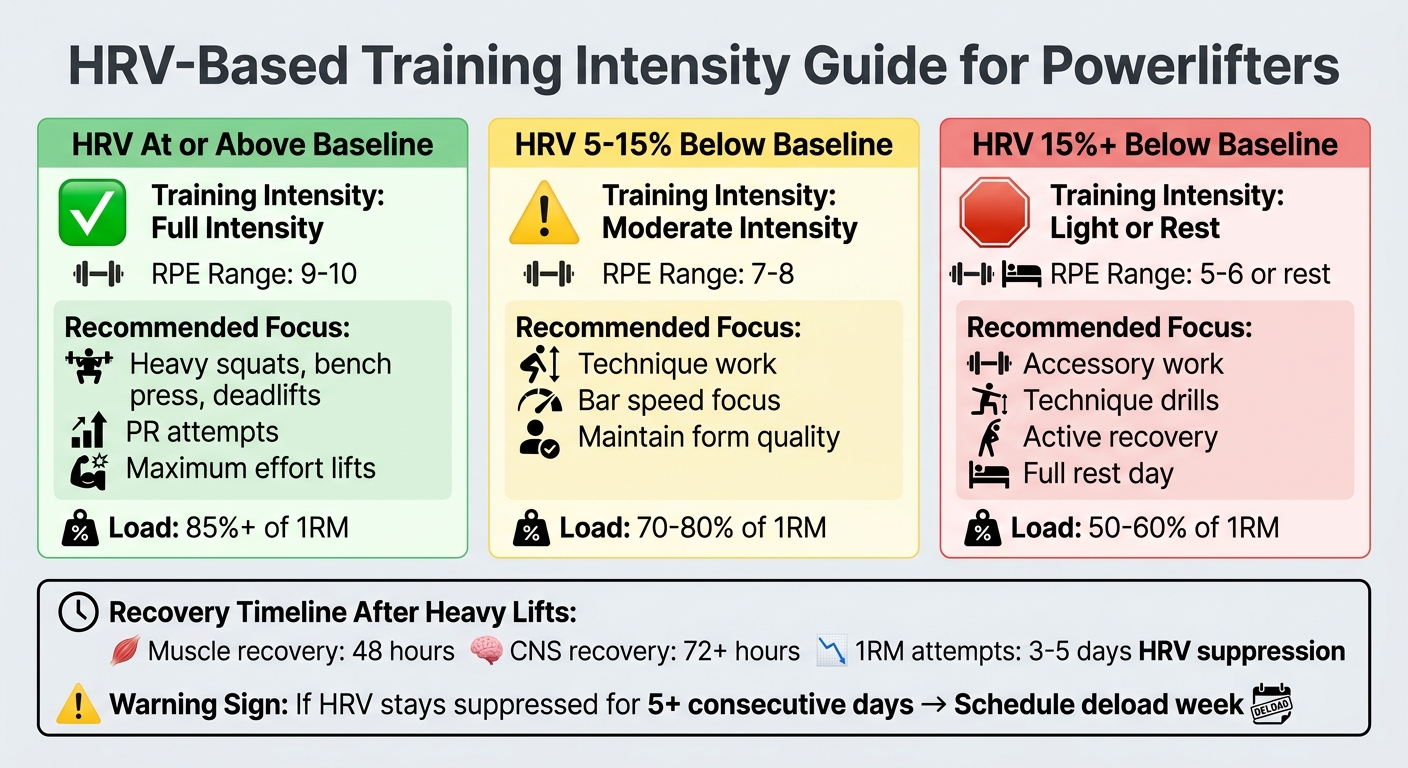
- At baseline or higher: Go heavy (RPE 9–10).
- 5–15% below baseline: Moderate effort (RPE 7–8).
- 15%+ below baseline: Light work or rest (50–60% 1RM).
- Tech tools like Polar H10, Oura Ring, and CueForm AI simplify tracking and form analysis.
- Recovery focus: Sleep, hydration, nutrition, and low-intensity cardio support HRV rebound.
Key takeaway: Use HRV to train smarter, recover better, and safely achieve long-term strength gains.
HRV-Based Training Intensity Guide for Powerlifters
Research Findings on HRV and Strength Training
HRV Changes During Overload and Recovery Phases
Studies reveal a consistent trend: HRV decreases during intense training blocks and rebounds during recovery phases. When performing heavy lifts at ≥85% of your 1RM, HRV often drops as your body accumulates fatigue. This decline reflects the strain on your central nervous system as it manages the workload [1].
During recovery, HRV should rise back to - or even surpass - your baseline levels. As HRV Zone explains:
HRV should rebound during deloads - if not, something else is wrong [1].
If your HRV remains suppressed for five or more consecutive days during an overload phase, it’s a sign to scale back on intensity [1]. In competition prep, lifters frequently experience an HRV dip 4–6 weeks before the event during high-intensity phases, followed by a rebound above baseline during the taper week [1].
These fluctuations in HRV highlight the body's response to different stages of resistance training programs.
HRV Patterns in Varied Resistance Programs
The intensity of your training directly impacts HRV patterns, which play a key role in optimizing powerlifting performance. For example, heavy lifts at ≥85% of your 1RM can suppress HRV for 24–72 hours, while true 1RM attempts may extend this suppression to 3–5 days [1]. Lower body exercises like squats and deadlifts cause greater systemic fatigue compared to bench presses, leading to more pronounced HRV drops [1].
A 5–15% drop in HRV suggests reducing training intensity to an RPE of 7–8, while a drop greater than 15% calls for focusing on lighter technique work or accessory movements [1]. Research on deadlifts also indicates that peak power is achieved at 70% of your 1RM, while peak force and rate of force development are best at 90% [4].
Smartphone-Based HRV Measurement
Advancements in technology have made HRV tracking more accessible than ever. Smartphone apps paired with chest straps are now practical tools for monitoring CNS recovery in strength training. The Polar H10 combined with the Elite HRV app is widely regarded as the gold standard for morning HRV readings [1]. These readings help guide your training decisions before you even hit the gym.
Using smartphone-based tools is straightforward. A quick 2–3 minute reading in the morning provides enough data to adjust your workout for the day. For even greater convenience, devices like the Oura Ring offer automatic overnight tracking, while Garmin’s HRV Status feature is another solid option for lifters [1]. Monitoring your 7-day HRV trends can reveal whether your training volume or intensity is outpacing your recovery capacity [1].
How to Use HRV to Guide Your Training
Adjusting Training Intensity Based on HRV
HRV (Heart Rate Variability) can be a powerful tool for tailoring your training intensity. A simple three-zone framework helps you decide how hard to push each day. When your HRV is at or above your baseline, it's the perfect time to go all-in - think heavy squats, bench presses, deadlifts, and even PR attempts. Training at RPE 9–10 fits well here [1].
If your HRV drops 5–15% below baseline, dial back the intensity to an RPE range of 7–8. Focus on maintaining proper technique and bar speed rather than sheer load [1]. When HRV dips 15% or more below baseline, it's time to switch to lighter work - use 50–60% of your 1RM, focus on accessory exercises, or even take a rest day [1].
To structure your week, aim for two heavy lower-body sessions and let your HRV guide you on the best days to tackle them [1]. If your HRV stays low for five or more days in a row, consider scheduling a deload week. During this time, your HRV should recover and rise above baseline [1].
| HRV Status | Training Adjustment | Recommended Focus |
|---|---|---|
| At or Above Baseline | Full intensity | Heavy lifts, PR attempts, RPE 9–10 |
| 5–15% Below Baseline | Moderate intensity | Technique work, bar speed, RPE 7–8 |
| 15%+ Below Baseline | Light or rest | 50–60% loads, accessory work, or full rest |
Once you’ve adjusted your training intensity, recovery strategies become essential to support your performance and HRV rebound.
Pairing HRV with Recovery Methods
HRV isn’t just about training - it’s also a guide for recovery. When your HRV is low, prioritize the basics: sleep, hydration, proper nutrition, and low-intensity cardio like Zone 2 walking or cycling. These activities help your body recover without adding extra strain [1]. On the flip side, avoid high-intensity interval training during these periods, as it can compete with your heavy lifting for central nervous system (CNS) recovery [1].
It’s important to note that CNS recovery often lags behind muscle recovery. While your muscles might feel ready after 48 hours, your nervous system may still need more time to bounce back [2]. If you’re training while in a caloric deficit, expect your baseline HRV to run lower. To avoid overtraining, try cutting your training volume by 20–30% [1].
Benefits of Personalized HRV-Based Programming
Using HRV to guide your training and recovery creates a plan that adapts to your body’s needs. This approach factors in not only your workouts but also external stressors like work deadlines, poor sleep, and other life challenges that can impact performance [6][3]. Cody McBroom, CEO of Tailored Coaching Method, sums it up well:
"You can't build muscle or lose fat if you're constantly overreaching. HRV helps you know when to push and when to pull back." [5]
Studies show that HRV-guided resistance training leads to more consistent strength and muscle gains compared to rigid, fixed schedules [3]. By pushing hard on high-readiness days and easing off when your body signals it needs rest, you can reduce fatigue, lower injury risk, and still accumulate enough training volume to make progress [1][3]. This method ensures that every session contributes to long-term growth without overloading your recovery capacity.
Using HRV Monitoring with CueForm AI
HRV for Daily Training Decisions
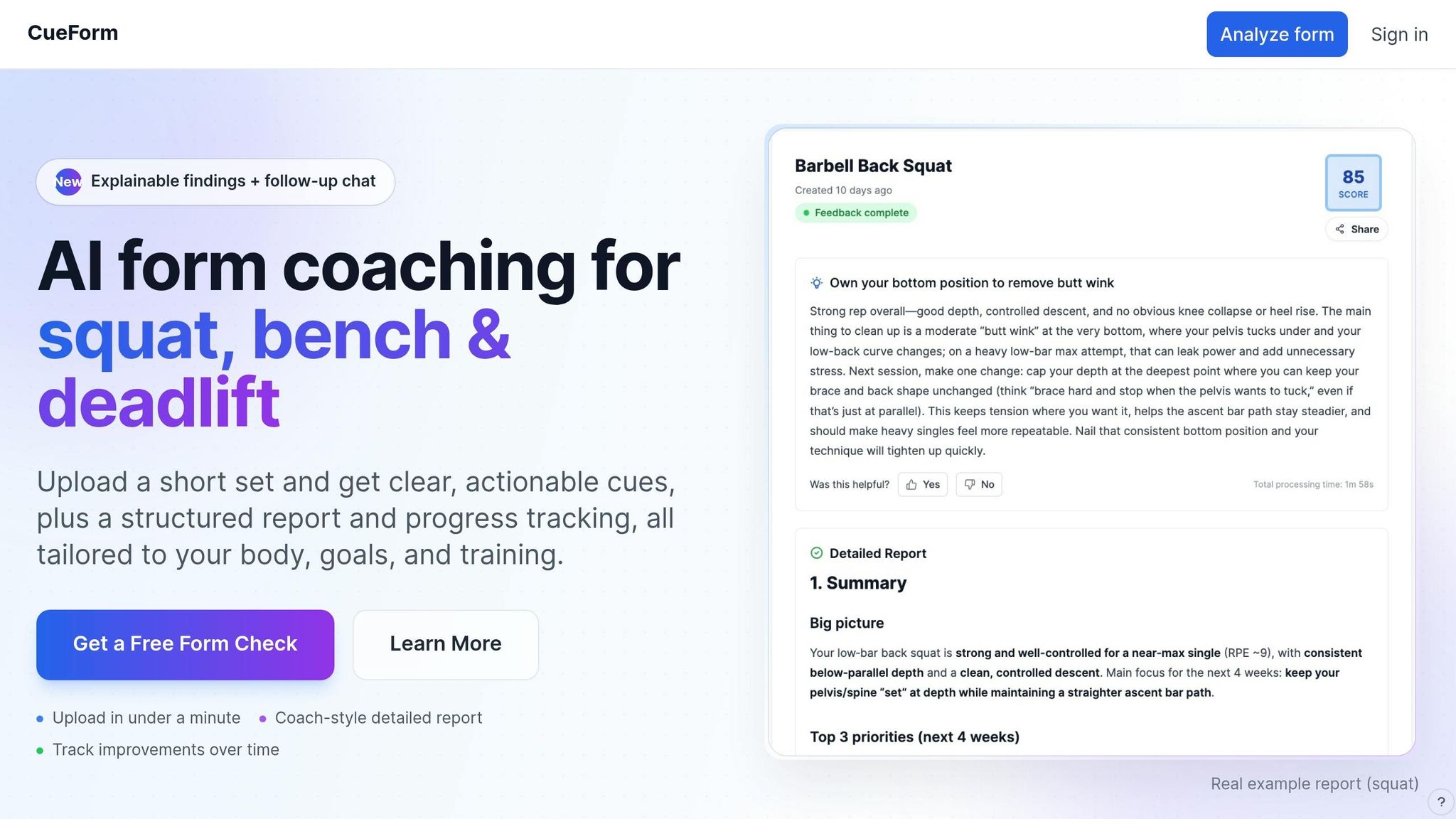
Your morning HRV (Heart Rate Variability) reading provides a snapshot of your central nervous system's (CNS) readiness, while CueForm AI offers real-time analysis of your lifting technique. When your HRV is at or above your baseline, you're good to go for heavy lifts like squats, bench presses, and deadlifts. After your sets, upload the footage to CueForm AI to catch issues like hip shifts during squats or uneven bar paths on the bench before they impact your performance [1].
If your HRV drops 5–15% below baseline, it's time to dial back. Keep your intensity at an RPE (Rate of Perceived Exertion) of 7–8 and focus on bar speed and clean movement patterns with the help of CueForm AI [1]. For HRV readings that are 15% or more below baseline, skip the heavy singles and switch to lighter technique work at 50–60% of your 1RM. CueForm AI can help identify and correct any persistent form issues during these sessions [1].
Using these daily HRV insights not only optimizes your performance but also ensures you're balancing recovery and reducing the risk of injury.
Improving Recovery and Reducing Injury Risk
A suppressed 7-day HRV average can signal an increased risk of overuse injuries, especially if you continue pushing heavy lifts with compromised form [2]. CueForm AI acts as an extra safeguard by identifying technical breakdowns, which are more likely to occur when your CNS is fatigued.
Here’s the thing: while your muscles might feel ready to lift again after 48 hours, your CNS often needs up to 72 hours to recover from heavy compound exercises [1]. Low HRV combined with slower bar speeds is a clear sign of systemic fatigue, meaning it’s time to reduce your load. On the other hand, if your HRV looks fine but your technique falters, the problem is likely mechanical - something CueForm AI can help you address with targeted feedback.
By pairing HRV monitoring with AI-driven form analysis, you create a well-rounded system that supports both recovery and proper technique.
Optimizing Strength Gains with AI and HRV
When it comes to long-term progress, the combination of HRV tracking and CueForm AI ensures every session, whether heavy or technique-focused, moves you closer to your goals. These tools work together to monitor readiness, guide deloads, and fine-tune your form for sustainable strength gains. For example, if your HRV stays suppressed for five or more consecutive days, that’s a sign you may need a deload [1][2]. During this time, use lighter loads and let CueForm AI help you refine your movement patterns. Once your HRV rebounds above baseline, you’ll be ready to tackle your next training cycle with a recovered CNS and improved technique, setting the stage for new PRs with reduced injury risk.
Studies show that HRV-guided training leads to more consistent strength and hypertrophy gains compared to rigid schedules [3]. By combining this approach with AI-backed form feedback, you’re not only adjusting intensity based on your readiness but also ensuring your lifts are technically sound. On high-readiness days, go after new maxes while the AI monitors for any breakdowns. On low-readiness days, focus on drilling perfect reps with submaximal weights. This balanced approach ensures every session contributes to progress without overloading your system.
Conclusion
Key Takeaways
HRV monitoring offers a clear picture of your central nervous system's (CNS) readiness - something muscle soreness alone can't provide. While heavy lifts like squats, bench presses, and deadlifts can stress your CNS for 24 to 72 hours, HRV recovery often takes longer. For example, elite Olympic weightlifters may see their one-rep max performance bounce back within 30 hours, but their HRV might not return to baseline for up to 60 hours[1][2]. This highlights why physical readiness and neural recovery don’t always align.
The approach is simple: train at full intensity when HRV is at baseline, scale back for moderate drops, and prioritize recovery or rest when HRV shows significant dips. If HRV stays suppressed for five or more days, it’s a clear signal to deload - not because your schedule says so, but because your body demands it[1].
Studies show that HRV-guided training leads to steadier gains in strength and hypertrophy compared to rigid, pre-set routines[3]. Pairing HRV insights with tools like CueForm AI creates a dynamic feedback system: HRV helps you decide when to push or ease up, while AI-driven form analysis ensures your technique remains sharp, even on low-readiness days. Together, these tools help lifters balance intensity and recovery for long-term progress.
The Future of HRV and AI in Strength Training
The move toward autoregulated, data-driven training is gaining momentum. Devices like the Polar H10, Oura Ring, and WHOOP make daily HRV tracking more accessible, while AI tools integrate this data with real-time performance metrics like bar speed, RPE, and movement quality. CueForm AI is leading this shift, combining HRV data with kinematic analysis to adjust both intensity and technique focus based on your readiness.
Instead of guessing whether fatigue stems from your muscles or CNS, HRV data pinpoints your recovery needs. It allows you to deload when necessary and avoid pushing through sessions with compromised form, reducing the risk of injury. These advancements are closing the gap between elite-level programming and everyday training, setting a new benchmark for smarter, safer, and more effective workouts.
Why HRV Doesn’t Always Reflect Recovery
FAQs
How do I find my HRV baseline?
To determine your HRV baseline, take measurements daily under consistent conditions. The best time to do this is first thing in the morning, before engaging in any activity. Lie on your back, stay relaxed, and measure for 2 to 2.5 minutes. Record your readings over several days or weeks to account for natural variations. This will help you establish a stable baseline, giving you a better understanding of your recovery and readiness for training.
What can lower my HRV besides lifting?
HRV, or heart rate variability, can drop for several reasons, including psychological stress, lack of quality sleep, illness, dehydration, or strenuous physical activity beyond lifting. These factors, when combined with the demands of lifting, can affect both your recovery and overall performance. Focusing on these areas might help you keep your HRV in check or even improve it.
Should I adjust volume or intensity when HRV is low?
Low HRV often indicates heightened stress or fatigue. During such times, it’s a good idea to dial back on your training volume or intensity. This gives your body the chance to recover properly, helping you sustain performance over the long haul.