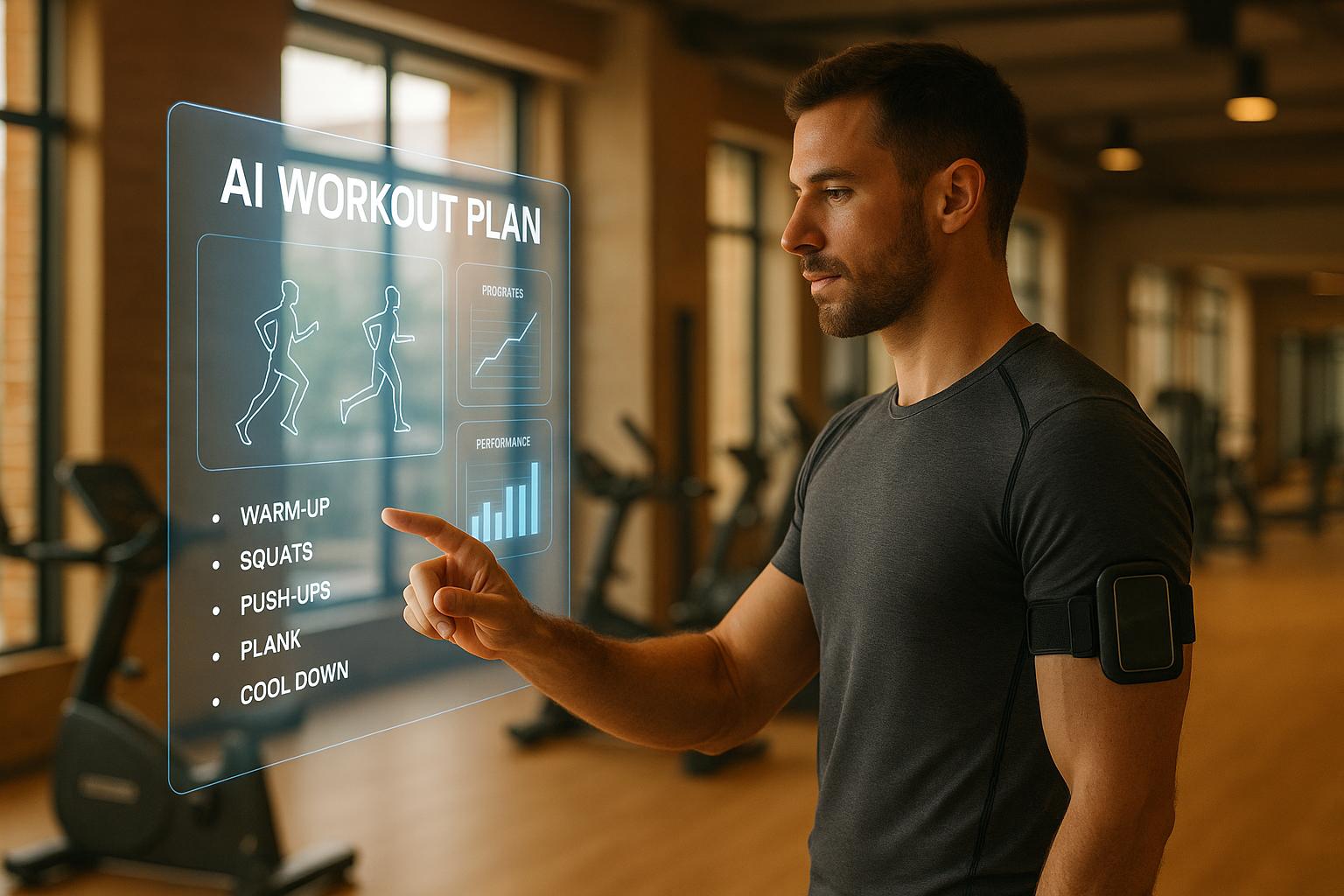
AI Workout Plans: Insights from Recent Studies
AI is reshaping fitness by offering smarter, more accessible workout plans tailored to individual needs. By 2025, 60% of active adults are expected to use AI-powered tools, benefiting from features like real-time feedback, personalized coaching, and injury prevention. Platforms, such as CueForm AI, analyze biometric data and exercise videos to improve form, reduce injuries, and optimize progress. Key benefits include:
- Personalized plans: Adjusted based on sleep, stress, and recovery data.
- Improved consistency: Users report a 30% increase in adherence.
- Better results: Fitness improves by 25% in 3 months with AI-guided plans.
- Injury prevention: A 25% reduction in injuries compared to traditional methods.
AI tools like wearables and video analysis aren't just for tracking - they actively guide users toward safer, more effective workouts. As fitness tech evolves, expect deeper integration of health data, including genetics and lifestyle factors, to further refine training plans.
The pros and cons of using AI to plan your next workout
How AI Creates Personalized Workout Plans
AI workout systems leverage cutting-edge technology to craft fitness plans tailored to individual needs. These systems go beyond generic routines by analyzing a wide range of data and continuously adjusting workouts based on each user's progress and circumstances.
AI Technologies in Fitness Coaching
At the heart of AI-driven fitness personalization are neural networks (e.g., MLP) and Natural Language Processing (NLP). These advanced algorithms process complex data sets to identify patterns in user performance, enabling precise exercise recommendations [2].
AI systems consider various data types, such as biometric, behavioral, genetic, and environmental factors, to fine-tune workout plans. This comprehensive data analysis ensures that the programs adapt to the user's unique needs instead of following a standard template.
Wearable technology plays a crucial role in gathering real-time data for these systems. By monitoring metrics like heart rate, sleep quality, and stress levels, wearables allow the AI to adjust workout intensity or recommend additional recovery time as needed. Users of AI-integrated wearables have reported 30% better workout consistency compared to traditional methods [1]. For instance, if you’ve had a restless night or high stress, your AI coach might suggest a lighter session or more rest to prevent overexertion.
Another major advancement is video analysis. Platforms like CueForm AI analyze exercise videos to provide personalized feedback on form and technique. The system evaluates key details such as bar path, body angles, and joint alignment during exercises like squats or bench presses. This feedback helps users refine their movements, improving both safety and efficiency. Research shows that 76% of users reported better form and technique thanks to AI-driven recommendations [2].
Real-Time Feedback and Plan Adjustments
One of the standout features of AI workout systems is their ability to deliver instant feedback and make dynamic adjustments. Unlike static workout plans, these systems continuously learn from your data and interactions, refining recommendations to align with your fitness goals [2].
For example, if your performance dips, the AI might reduce workout intensity or extend recovery periods. On the other hand, if you’re consistently exceeding targets, the system can raise the difficulty to keep you progressing [1]. This adaptability ensures that workouts remain challenging yet achievable.
Another highlight is adaptive goal-setting, where AI creates and adjusts personalized fitness goals. As your fitness improves, the system gradually increases the difficulty to maintain progress without overwhelming you. A study found that 81% of AI-generated plans effectively aligned with users' goals, such as weight loss, strength training, or endurance building [2].
AI fitness coaching also benefits from conversational interfaces powered by NLP. Users can communicate preferences, constraints, or objectives in plain language, and the system translates these into customized training plans. This interactive approach has proven highly motivating, with 89% of participants reporting increased engagement when using AI assistants that employ NLP techniques [2].
Real-world results back up these claims. In 2025, FitTech's AI-driven platform showed that users achieved a 30% boost in workout consistency and a 25% improvement in overall fitness within three months [1]. The platform's ability to adapt to changing lifestyles and progress makes it a game-changer compared to traditional, static programs.
Safety is another critical aspect of AI workout planning. By analyzing recovery metrics, these systems can recommend rest days or reduced intensity to prevent overtraining and injuries. This approach has led to 25% fewer injuries compared to conventional training methods [4]. The emphasis on safety ensures that users can focus on long-term progress without risking their health.
Benefits of AI-Powered Workout Plans
AI-driven workout plans are changing the fitness game by improving safety, boosting motivation, and delivering measurable strength gains through personalized coaching and data analysis.
Better Exercise Form and Safety
AI doesn't just design workouts - it also helps fine-tune how exercises are performed. By leveraging video analysis, AI platforms provide detailed feedback on exercise form, making workouts safer and more effective.
A great example is CueForm AI, which analyzes videos of exercises like squats, bench presses, and deadlifts. It evaluates key aspects such as squat depth, knee alignment, bar path, hip hinge mechanics, shoulder blade movement, and elbow positioning. Based on this analysis, it offers tailored cues to correct and improve form.
This technology has a big impact on safety. Research shows that 78% of fitness trainers now use AI to create customized workout plans, leading to 25% fewer injuries compared to traditional plans [4]. AI's ability to spot form issues early and provide immediate feedback helps users avoid common mistakes. Plus, interactive coaching features allow users to communicate directly with AI coaches about discomfort or fatigue, ensuring workouts are adjusted in real time for maximum safety and effectiveness.
Increased Motivation and Consistency
Staying motivated and consistent is often the hardest part of fitness, but AI-powered platforms excel at keeping users on track. Features like personalized coaching and adaptive goal-setting make the experience more engaging than old-school, static workout programs.
The numbers speak for themselves: Studies show a 46% increase in workout adherence and an 89% boost in motivation when using AI coaching. Additionally, 71% of users exercise more regularly thanks to consistent AI reminders [2] [4]. By tailoring goals to individual progress and syncing with users' schedules, these platforms help people stick to their routines - even during busy times. Progress tracking and visualizations also play a role, giving users clear evidence of their achievements and reinforcing their commitment to regular exercise.
Better Strength Gains and Progress
AI does more than keep you motivated - it optimizes your training for better results. By analyzing data, it fine-tunes variables like intensity, volume, and rest to maximize strength gains while avoiding overtraining.
For example, users following AI-guided plans reported a 25% improvement in overall fitness within three months [1]. Recovery times are also optimized, with users experiencing 30% faster recovery rates when following AI recommendations [4]. The system gradually increases training demands to ensure steady progress, and with an accuracy of 85–90% in matching expert-designed programs [5], AI plans are driving significant improvements.
The impact is clear: 81% of users say AI-created workouts align with their fitness goals [2], and 90% report noticeable performance gains with AI-guided training [4]. This combination of personalized adjustments and consistent support creates a cycle of progress that keeps users coming back for more.
sbb-itb-c91a623
CueForm AI: AI-Powered Strength Training Feedback
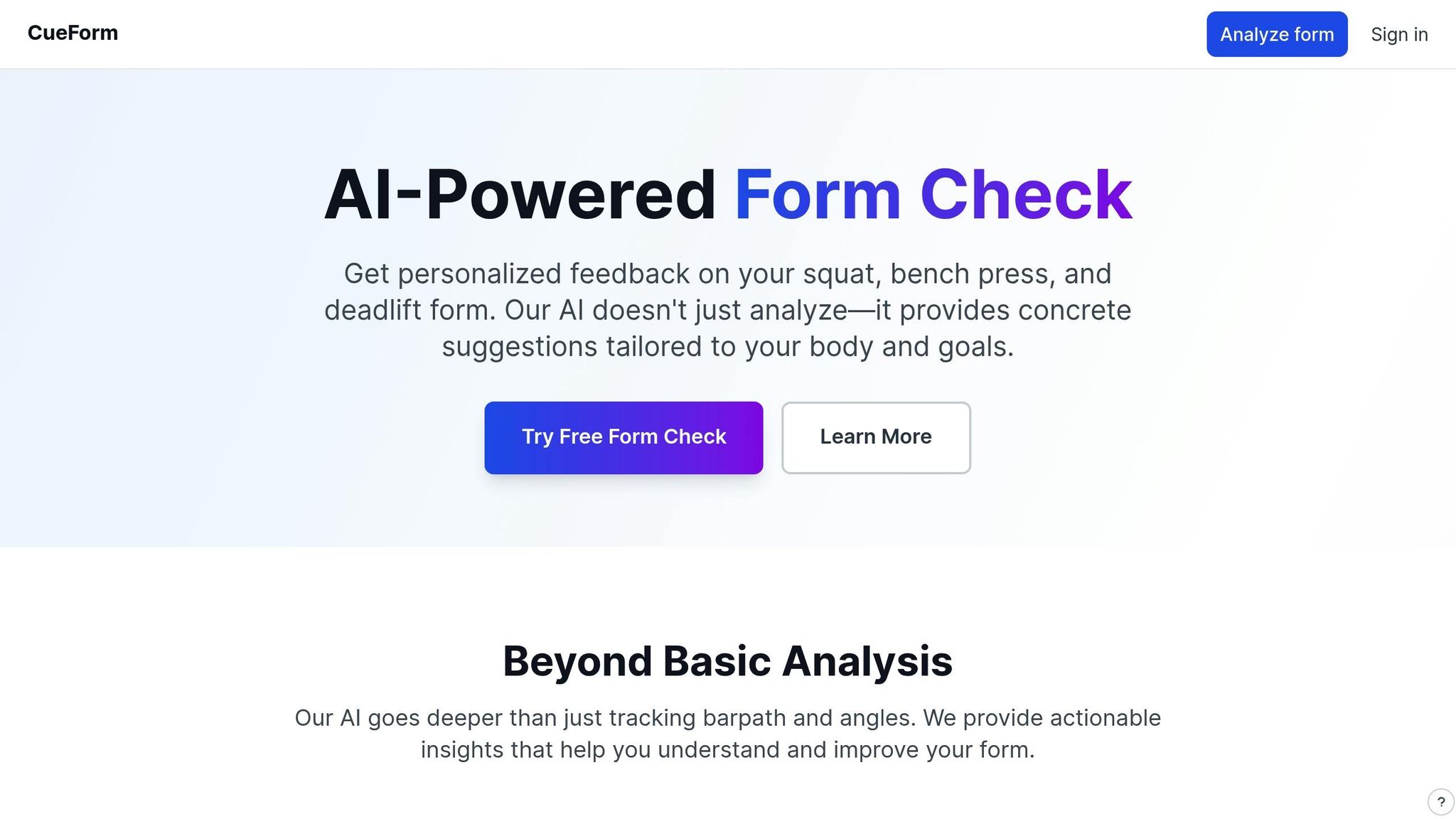
CueForm AI zeroes in on one of the most critical aspects of strength training: proper exercise form. By leveraging advanced form analysis technology, this platform addresses a key challenge in strength training - where technique can make all the difference in achieving results and avoiding injuries.
Video Analysis for Strength Training
CueForm AI transforms your smartphone into a personal coach with its video analysis technology. Users can upload or record videos of their squats, bench presses, and deadlifts - the cornerstone movements of strength training - and receive detailed, actionable feedback in just minutes.
The platform’s analysis is comprehensive, diving into specific metrics for each movement:
- Squats: Evaluates squat depth, knee alignment, bar path, and hip hinge mechanics.
- Bench Press: Assesses bar path consistency, shoulder blade retraction, elbow positioning, and touch point accuracy.
- Deadlifts: Focuses on hip hinge mechanics, bar path tracking, back position maintenance, and lockout completion.
What sets CueForm AI apart is its ability to tailor feedback to individual users. By incorporating details like your anatomy, training goals, and schedule, the platform ensures that its recommendations are precise and relevant to your unique biomechanics and circumstances - making it far more than just a generic analysis tool.
Flexible pricing options make CueForm AI accessible to a wide range of users:
| Plan | Price | Features |
|---|---|---|
| Free Plan | $0/month | Limited full reviews |
| Starter Plan | $10/month | 100 full reviews, advanced AI models, enhanced features |
Interactive Coaching and Injury Prevention
CueForm AI doesn’t stop at analysis - it takes things further with interactive coaching. Through conversational AI, users can engage directly with their digital coach to ask follow-up questions, address specific concerns, and get clarity on form cues. This feature turns the platform into an active coaching partner rather than just a passive tool.
The impact of this interactive coaching is clear: 76% of users report improved form and technique thanks to AI-driven feedback [2]. Unlike tools that merely highlight issues, CueForm AI provides clear, actionable steps to correct them, empowering users to make meaningful improvements.
Injury prevention is another standout benefit. By refining technique, the platform helps reduce injury risks, with AI-guided training showing a 25% decrease in injury rates [4]. CueForm AI excels at identifying subtle form breakdowns, especially those caused by fatigue - precisely when injuries are most likely to occur.
For those who don’t have access to in-person coaching, CueForm AI offers a game-changing solution. It delivers expert-level feedback on demand, making professional-grade coaching more accessible. This is especially significant as 60% of active adults are projected to use AI-powered fitness tools by 2025 [1].
Real-time feedback creates a continuous learning cycle where users can immediately apply corrections and track improvements in their next session. This instant application of guidance aligns with the broader trend showing that 90% of individuals report better performance with AI-guided training [4]. By focusing on form, CueForm AI not only enhances technique but also boosts overall training effectiveness.
Future Trends in AI Fitness Research
AI-powered fitness is heading into a new era, where personalized training takes center stage. Instead of just tracking basic workout stats, the next generation of systems will pull from a broader range of health data, adapting workouts in real time to meet individual needs.
Personalized Health and Fitness Trends
The future of AI in fitness is all about customization - combining genetic insights, lifestyle patterns, and continuous health monitoring to create truly individualized workout plans [1]. This marks a big step forward from the generic programs many people rely on today.
Genetic insights are opening up new possibilities. Early research shows that AI can analyze genetic markers to predict things like injury risk, recovery speed, and training potential. For instance, specific genetic variations might indicate a higher likelihood of certain injuries or suggest how quickly someone can bounce back after intense exercise. In the future, AI could use this information to fine-tune workout recommendations.
Lifestyle data will also play a much bigger role. Beyond tracking steps, future AI systems will incorporate factors like work schedules, stress levels, sleep quality, and diet. Imagine an AI trainer that recognizes you’ve had a stressful day or a poor night’s sleep and adjusts your planned high-intensity workout to a gentler recovery session instead.
Wearables like Fitbit and WHOOP are already helping AI systems adapt in real time by providing health metrics such as heart rate variability, blood oxygen levels, and muscle fatigue [1] [3]. These devices allow AI to make on-the-spot decisions about exercise intensity, rest periods, or even whether to pause a workout altogether. Looking ahead, these platforms will enhance real-time coaching by integrating even more biometric data.
Another exciting shift is the move toward holistic wellness. Future AI systems won’t just focus on physical fitness - they’ll also incorporate mental health, nutrition, and recovery strategies into a full-spectrum approach to well-being [1]. For example, your AI coach might suggest a meditation session to complement your strength training or recommend dietary tweaks to support your recovery goals.
While these advancements are promising, there are still challenges that need to be addressed to fully unlock AI’s potential in fitness.
Current Research Gaps
Despite the progress in personalized training, there are hurdles to overcome to ensure these systems deliver long-term benefits.
One major issue is the lack of long-term effectiveness studies [1]. Most research so far has focused on short-term outcomes, typically over 8 to 12 weeks. There’s a need for extended studies to see if users maintain their fitness improvements over time, especially after they stop using AI-guided programs.
Another challenge is the lack of diversity in current research. Many studies focus on young, healthy, and tech-savvy participants, leaving out a wide range of people [1]. Without datasets that include various ages, ethnicities, fitness levels, and health conditions, AI models risk producing biased or less effective recommendations for underrepresented groups.
Safety is another area that needs more attention. Although current studies report a 25% reduction in injury rates with AI-guided training [4], we need more robust, long-term data to understand how these systems perform across different demographics and workout intensities.
Finally, there are integration challenges when it comes to combining data from multiple sources like wearables, health apps, genetic tests, and medical records. Research into standardizing and validating this data, while also ensuring privacy and security, is still in its early stages.
To address these gaps, researchers are starting to conduct long-term studies and large-scale trials with more diverse populations [1]. Collaboration between universities, tech companies, and healthcare providers will be critical to making AI fitness tools safe, effective, and accessible for everyone.
Conclusion: AI's Role in Fitness
Research highlights how AI-powered workout plans are transforming fitness by delivering measurable improvements in performance, safety, and consistency. For instance, 90% of users report better performance with AI-guided training, and injury rates drop by 25% when following these programs [4].
These systems excel at providing personalized, real-time coaching that adjusts continuously based on your progress. By analyzing factors like form, fatigue, and overall performance, AI can boost workout adherence and effectiveness by an impressive 20–40% [1][4]. Additionally, AI-driven feedback helps users refine their exercise techniques, with 76% reporting improved form, which significantly reduces the risk of injuries [2].
One example is CueForm AI, a platform that makes advanced fitness coaching accessible. Users can upload videos of exercises like squats, bench presses, or deadlifts to receive tailored analysis and improvement tips that align with their specific goals and body mechanics. This real-time feedback has been shown to enhance both safety and performance. CueForm AI offers a free plan for limited reviews, while its starter plan, priced at $10/month, includes 100 detailed reviews using advanced AI tools.
Looking ahead, experts predict that by 2025, 60% of active adults will incorporate AI-powered tools into their fitness routines [1][3]. Whether you're fine-tuning your lifting technique, aiming to reduce injury risks, or striving for consistent workouts, AI platforms provide a data-driven, adaptive approach to help you achieve your goals more efficiently.
FAQs
How does AI create workout plans tailored to my fitness goals and individual needs?
AI leverages cutting-edge algorithms to evaluate key aspects like your fitness goals, body composition, and training schedule. By taking these individual factors into account, it creates workout plans tailored to match your specific objectives and physical abilities.
CueForm AI goes beyond just planning. It provides personalized feedback on your exercise form, helping you improve performance, lower the risk of injuries, and stay focused on reaching your fitness milestones.
How do wearables and video analysis improve AI-driven workout plans?
Wearables and video analysis are game-changers in AI-driven workout plans, offering real-time feedback on essential performance metrics. They track details like bar path, body angles, and overall form during exercises.
With this data, AI systems provide personalized recommendations to refine technique, minimize injury risks, and improve outcomes. These tools make every workout more aligned with individual goals and needs, ensuring training sessions are both safer and more effective.
How can AI help prevent workout injuries more effectively than traditional fitness methods?
AI technology, such as CueForm, is changing the way we approach workout safety by offering personalized feedback on exercise form. It works by analyzing your movements during exercises like squats, bench presses, and deadlifts to pinpoint areas that might need adjustment, providing tailored cues to help you improve.
This real-time guidance plays a key role in keeping your form on point, minimizing strain on your joints and muscles, and reducing the likelihood of injuries. By leveraging AI’s accuracy, it ensures your workouts are not only safer but also more effective.
Related Blog Posts
Plans
Choose the plan that best fits your needs.
Free
Try it out
Starter
Perfect for fitness enthusiasts